
Meet Costas, Solebike Co-Founder

Case Study · Academic Architecture Experience — A custom Athens walking tour designed for aac Academy for Architectural Culture, Hamburg, Germany, exploring neoclassical, interwar and postwar architecture, public space and Anafiotika.
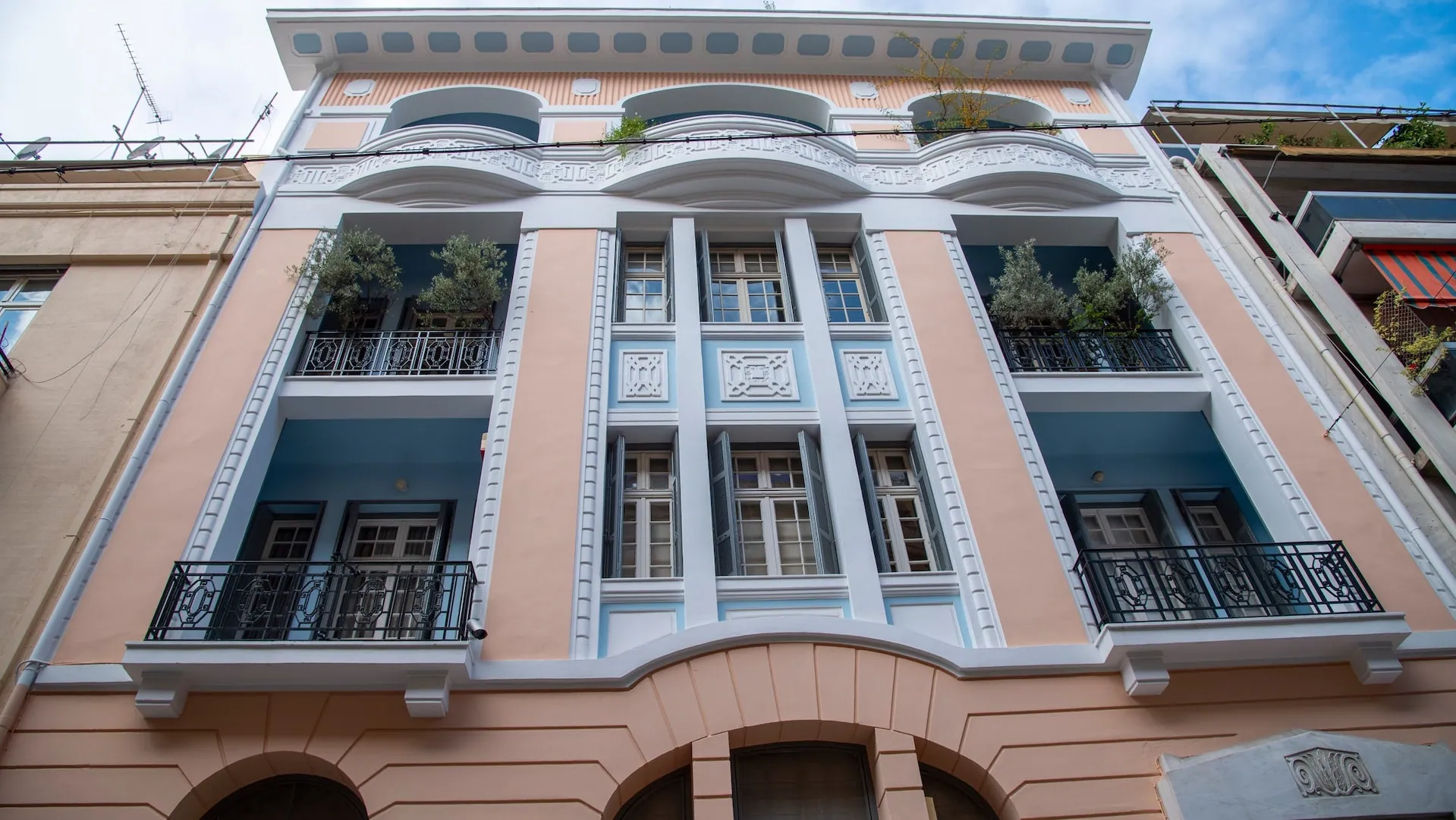
Athens is usually known for its ancient monuments. For architecture students, though, the city offers something equally valuable: a dense, walkable record of how urban housing and public space evolved over two centuries.
Solebike recently designed a custom academic walking tour for a university group from Hamburg, created to help students understand Athens through its architecture — not as a single style, but as layers added one after another.
The route began at Dionysiou Areopagitou, where the group examined neoclassical houses near the current Spanish Embassy — clean, symmetrical facades that set the tone for the rest of the walk. From there, the group moved to the Onassis Foundation area for a second, distinct neoclassical example, useful for comparing scale and detail between two buildings from the same period.
The walk then shifted eras entirely, stopping at a postwar building on Herodou Attikou before continuing toward the Presidential Mansion. This jump — from 19th-century symmetry to postwar concrete — was deliberate, giving students an immediate, physical sense of how much the city’s architectural language changed in a single lifetime.
From there, the group passed Zappeion and continued into Plaka, where interwar apartment houses at a busy crossroad offered a third architectural moment, distinct from both the neoclassical and postwar stops. The walk continued through a handful of further examples spanning different periods, before finishing with a climb up to Anafiotika — presented to the group as a genuinely unique housing type within Athens, and a fitting final contrast to everything seen earlier.
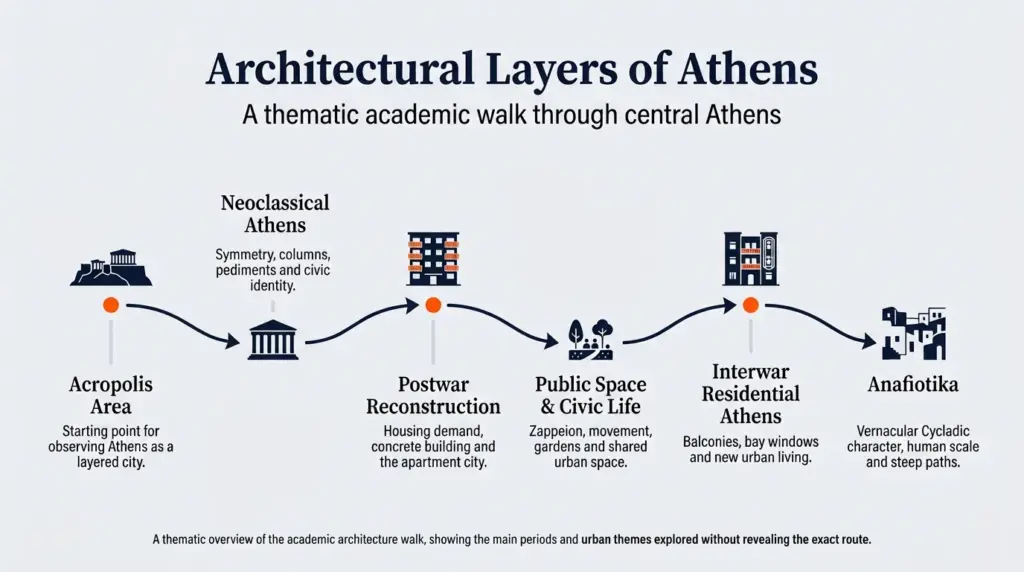
A thematic academic walk through central Athens, tracing neoclassical, postwar, civic, residential, and Anafiotika architecture. AI-assisted illustration: Solebike.
This tour was guided by Nasos, Solebike’s main scientific collaborator for architecture-themed experiences. His role is to help university groups read Athens through its façades, housing types, public spaces and historical layers. By combining local knowledge with architectural observation, he connects what students see on the street with the wider story of how the city developed.
For architecture-themed experiences generally, Solebike works with specialist collaborators, and input from architects or civil engineers can be arranged where appropriate for a group’s specific academic focus.

The neoclassical stops gave students a clear vocabulary to work with: symmetrical façades, columns and pilasters, pediments above doors and windows, and decorative cornices marking the roofline. These weren’t abstract design choices — they reflected a specific moment when the newly independent Greek state used classical architectural references to express a particular kind of civic identity, one that consciously linked modern Athens back to its ancient namesake.
Seeing two separate neoclassical examples early in the route — near the Spanish Embassy and at the Onassis Foundation — let students compare how the same underlying style could vary in scale and ornamentation depending on the building’s original purpose.
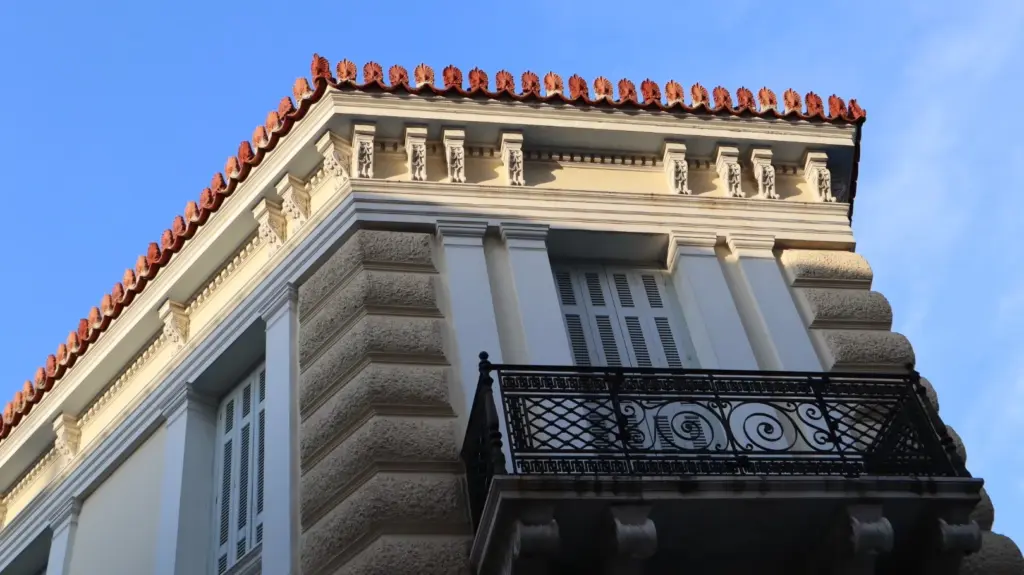
Architectural details like balconies, cornices, and tiled roofs reveal the layered character of historic Athens streets. Photo: Sofia Souflaki.
The interwar stop in Plaka marked a clear shift. Compared to the neoclassical houses seen earlier, these apartment buildings showed cleaner geometry, projecting balconies, and bay windows — features tied to a genuinely new way of urban living, as Athens moved from single-family houses toward denser, multi-unit residential buildings.
Standing at this stop directly after the neoclassical examples made the comparison almost automatic: the ornamentation had thinned out, the forms had simplified, and the building’s relationship to the street had changed along with it.
The first four-story apartment building adds a key residential layer to the academic walk through modern Athens. Photo: Sofia Souflaki.
The postwar building on Herodou Attikou represented a different kind of story altogether — one shaped less by aesthetic choice than by necessity. After the 1950s, Athens faced rapid urbanisation and intense housing demand, met largely through reinforced concrete construction and the now-familiar polykatoikia, or apartment building.
These buildings are easy to overlook precisely because they’re everywhere. But they’re not simply background architecture — they house the majority of the city’s population today, and understanding them is essential to understanding how Athens actually functions as a living, working city, distinct from its historic centre.
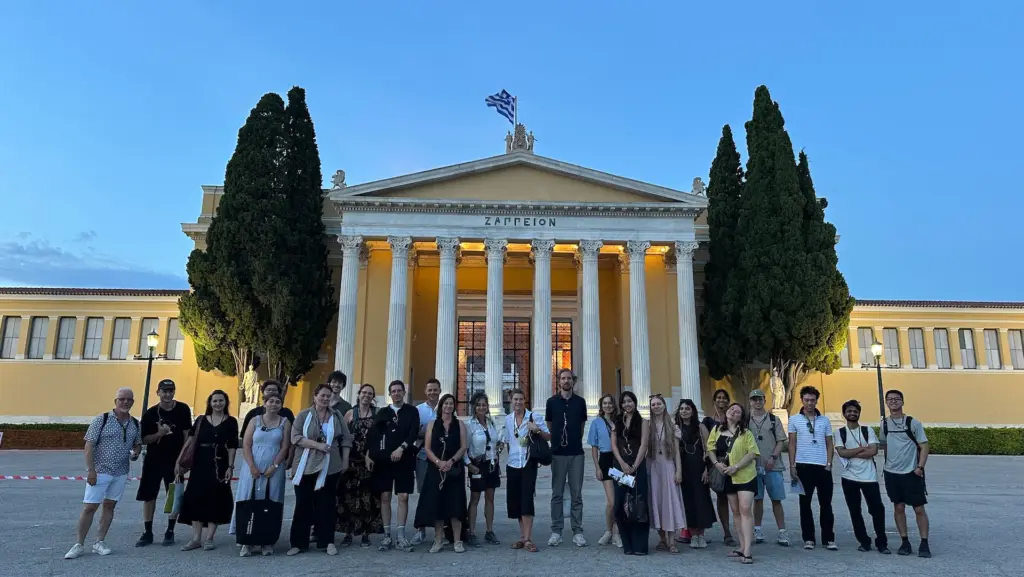
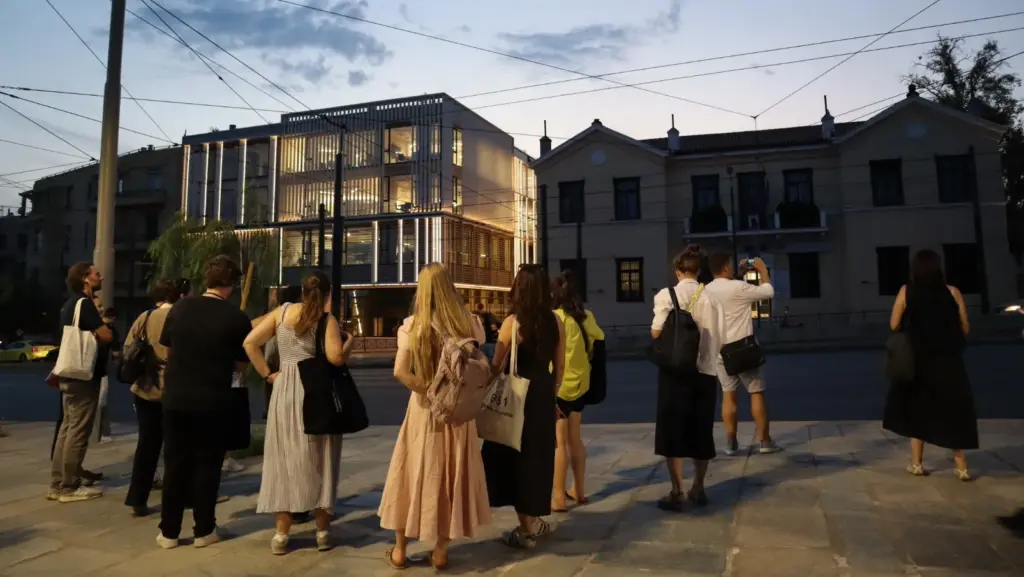
The AAC group at Zappeion during an academic walk exploring Athens’ civic architecture, public space, and urban identity. Photo: Sofia Souflaki.
Passing Zappeion gave the group a different kind of architectural lesson — one focused on public rather than residential space. Public buildings and gardens shape a city differently than housing does: they organise movement, host civic life, and create the kind of open, shared space that residential streets generally don’t.
Including a public-space stop alongside the residential examples gave students a fuller picture of Athens’ architectural range, beyond the question of who lives where and in what style.
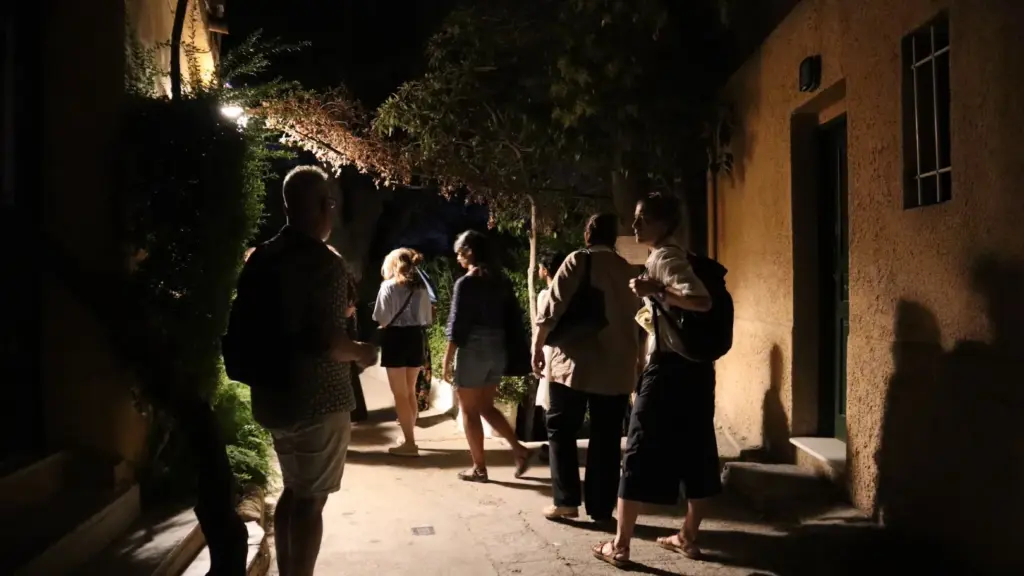
Anafiotika adds an intimate final layer to the architecture walk, with village-like paths beneath the Acropolis. Photo: Sofia Souflaki.
Anafiotika closed the route with a deliberate contrast. Built by workers from the Cycladic islands in the 19th century, its whitewashed walls, narrow paths, and steep, irregular terrain follow an entirely different logic than anything else on the route — self-built, human in scale, and almost entirely without the formal planning visible everywhere else in the city.
As a final stop, it worked well precisely because it broke the pattern the group had been following all walk — a reminder that Athens’ architectural story isn’t only about grand facades and formal periods, but also about small, informal settlements shaped by the people who actually built them.

An academic walking tour stop exploring how interwar apartment buildings shaped modern residential life in Athens. Photo: Sofia Souflaki.
A structured architecture walk like this gives students several things a lecture alone can’t:

The architecture walk connects neoclassical homes, Acropolis views, and urban storytelling in one layered Athens experience. Photo: Sofia Souflaki.
This Hamburg university walk is one example of how Solebike can design a city experience around a specific academic subject. The same approach can be adapted for universities, technical schools, study-abroad programmes and specialist groups looking for more than a standard sightseeing tour.
Architecture is one of the strongest themes for Athens, because the city allows students to compare different periods and urban conditions within a compact walking route. Depending on the group’s focus, a route can explore neoclassical residences, interwar apartment buildings, postwar housing, public space, pedestrian movement, mobility, sustainability or neighbourhood identity.
Other academic themes are also possible. Solebike has experience creating custom group experiences around subjects such as food culture, Mediterranean identity, urban life and sustainability. For architecture-focused visits, tours can be designed in collaboration with architects and civil engineers, with specialist input arranged where appropriate.
Explore our Private & Custom Athens Tours page to see how Solebike designs walking, eBike and themed group experiences for universities, schools and specialist groups.
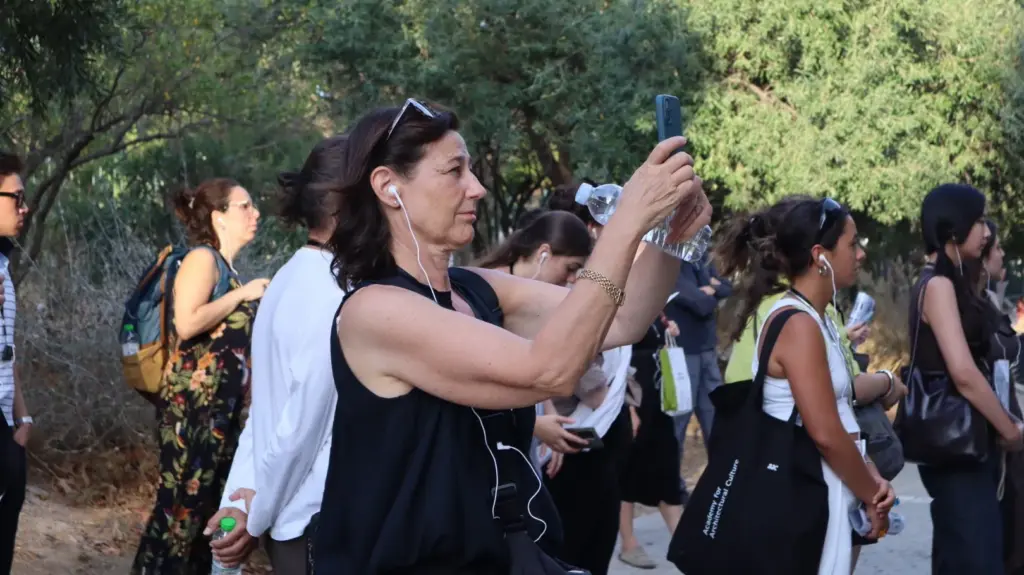
Participants follow an architecture-focused Athens walk, using audio headsets to explore the city’s urban layers in context. Photo: Sofia Souflaki.
Planning a university visit, architecture field trip or themed academic experience in Athens? Tell us your group size, subject, available time and preferred format, and Solebike will suggest a custom walking or eBike route shaped around your learning goals.
Request an academic group proposal through our Private & Custom Athens Tours form.
Yes. Solebike can design custom academic experiences in Athens for universities, architecture schools, civil engineering departments and technical programmes, with routes focused on architecture, public space, housing types and urban development.
Architecture-themed tours can be designed in collaboration with architects and civil engineers. Specialist input can be arranged where appropriate, depending on the group’s academic focus and availability.
A custom architecture route can include neoclassical, interwar and postwar Athens, as well as public buildings, residential examples and unique settlements such as Anafiotika.
Yes. Walking works well for close observation and discussion, while eBikes help groups cover more areas of Athens. Solebike can suggest the best format based on the group size, timing and learning goals.
Send Solebike your group size, academic subject, preferred date, available time and any special focus. We will suggest a custom route and format based on your learning goals.
Athens is not only a city to visit, but a city to observe, question, and understand. Through our tours and the guides we share here, we try to offer a thoughtful and real sense of the city — its monuments, neighbourhoods, local life, historical layers, and everyday rhythm — so students, educators, and curious travellers can experience Athens with attention, context, and a deeper connection to place.







A huge thank you for this philosophy-themed bike tour of Athens. It was an enriching and unique experience, following in the footsteps of Socrates, Plato, and Aristotle, blending history, reflection, and exploration of the city.