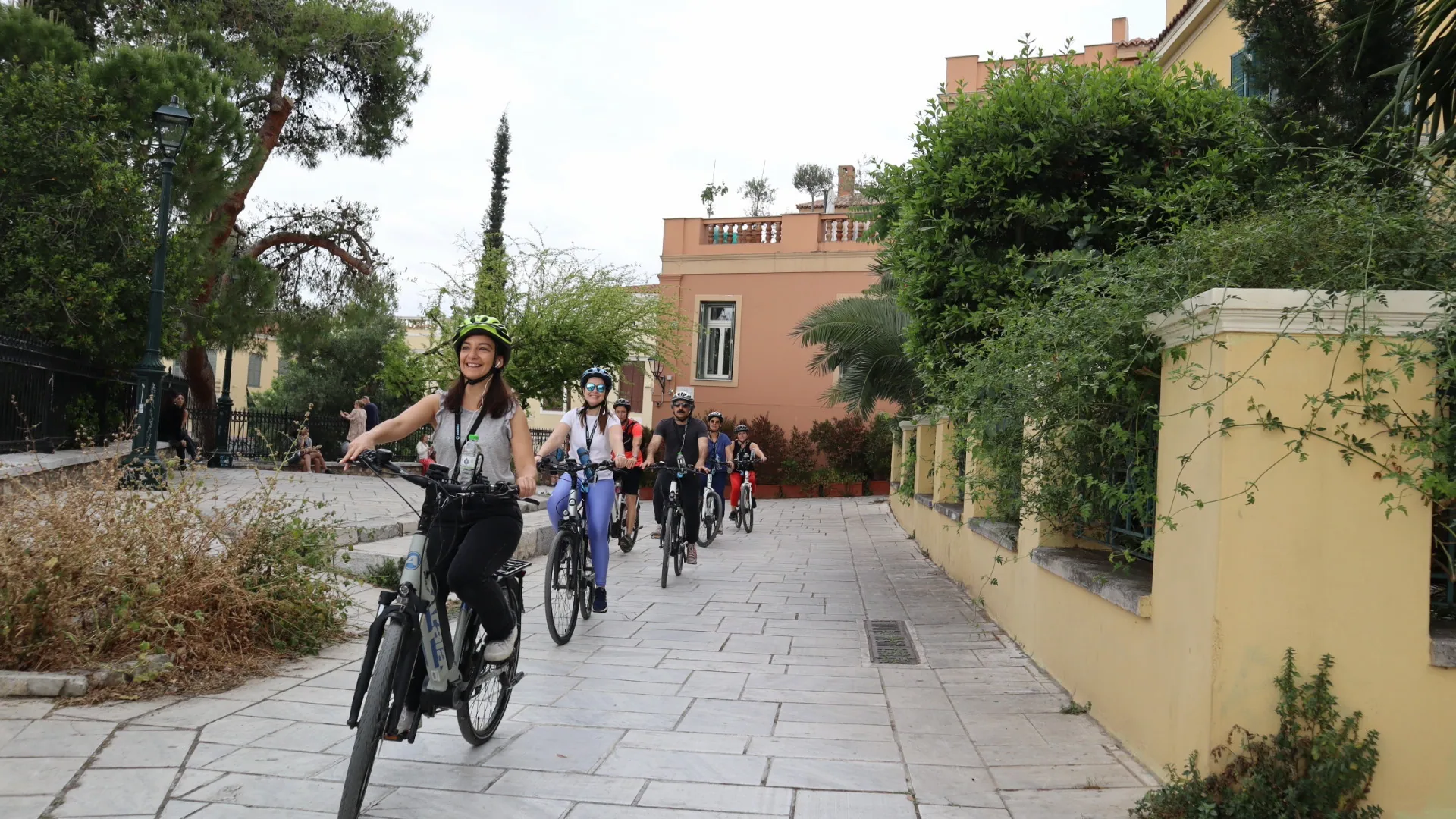
Meet Costas, Solebike Co-Founder

If you’re weighing up guided bike rides for your trip to Athens, you probably have a handful of practical questions before committing: is it actually safe, do you need to be fit, what will you realistically see, and is it worth it compared to just walking? This guide answers all of that, so you know […]
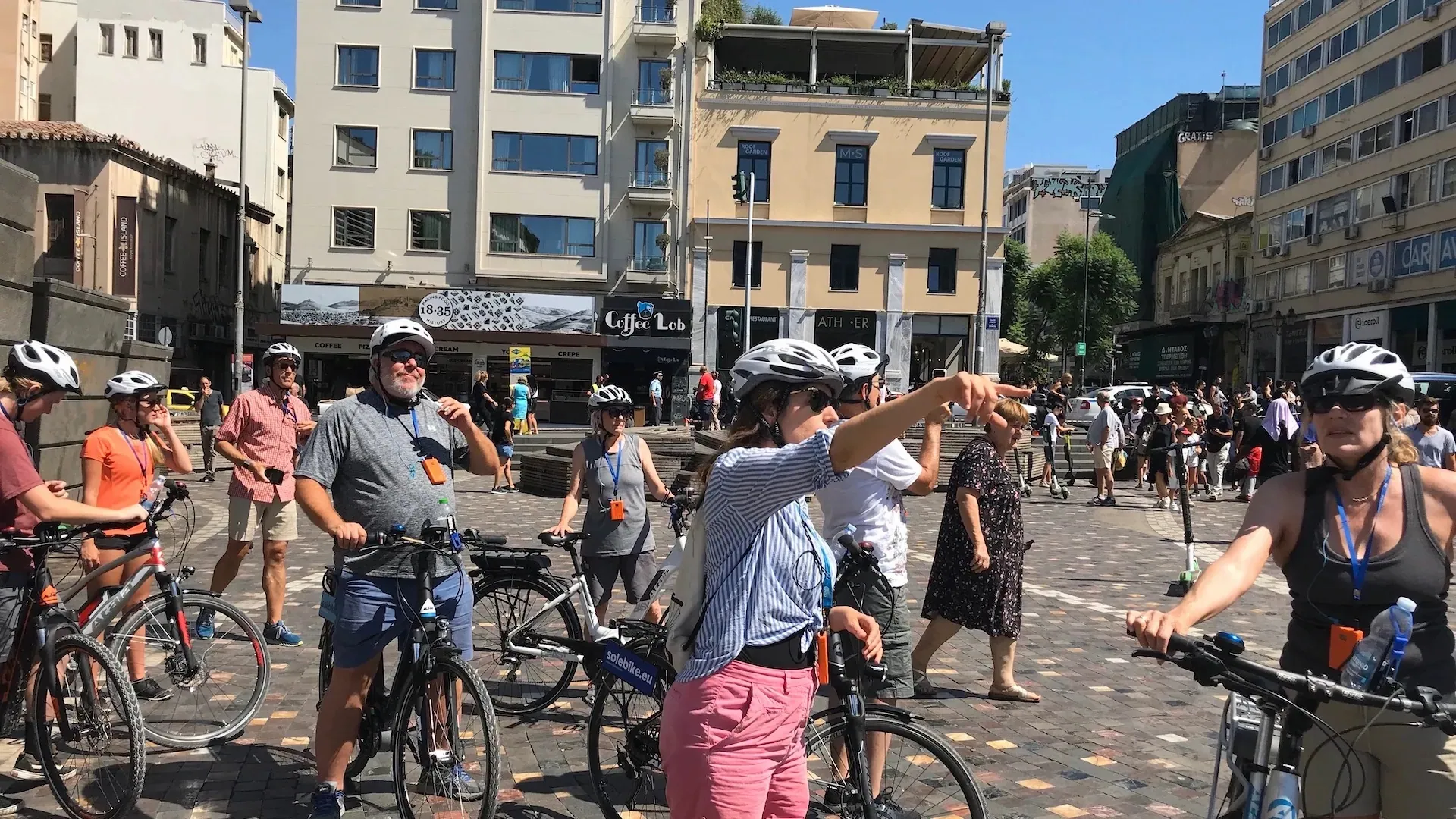
If you’re weighing up guided bike rides for your trip to Athens, you probably have a handful of practical questions before committing: is it actually safe, do you need to be fit, what will you realistically see, and is it worth it compared to just walking? This guide answers all of that, so you know exactly what to expect before you book.
A guided bike ride is exactly what it sounds like — a cycling tour led by a local guide who plans the route, handles the navigation, and provides historical and cultural context along the way. Instead of figuring out where to go and what you’re looking at on your own, you follow someone who already knows the city, the safest streets to use, and the stories behind what you’re passing.
The format usually includes a bike (standard or electric), safety equipment like a helmet, a small group of fellow travellers, and a set route with planned stops. Some guided bicycle tours are structured around a theme — ancient history, food, neighborhoods — while others simply aim to cover the highlights of a city efficiently.
Athens has a reputation for being hilly, chaotic, and car-heavy, and in some areas that’s fair. But the historic center — where most visitors spend their time — is more bike-friendly than people assume. Pedestrian streets, connected parks, and relatively flat stretches through the old town make it possible to cover far more ground by bike than on foot, without the exhaustion of walking for hours in the heat.
Athens bike rides work particularly well because the city’s major landmarks are spread out just enough that walking between all of them takes a long time, but biking links them together in a fraction of that time. A guide who knows exactly which quiet streets to use, and which busy avenues to avoid, makes this even more effective.
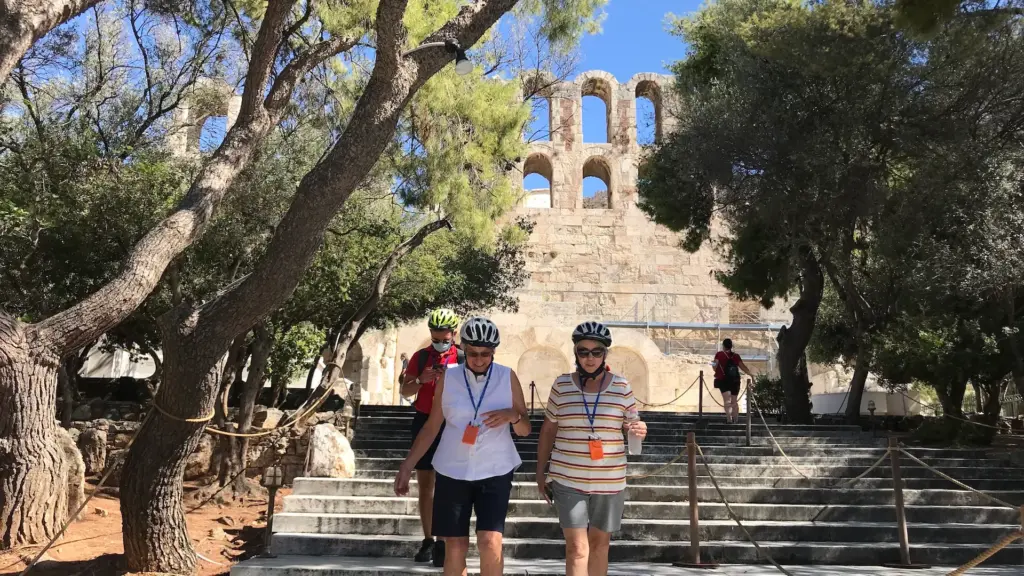
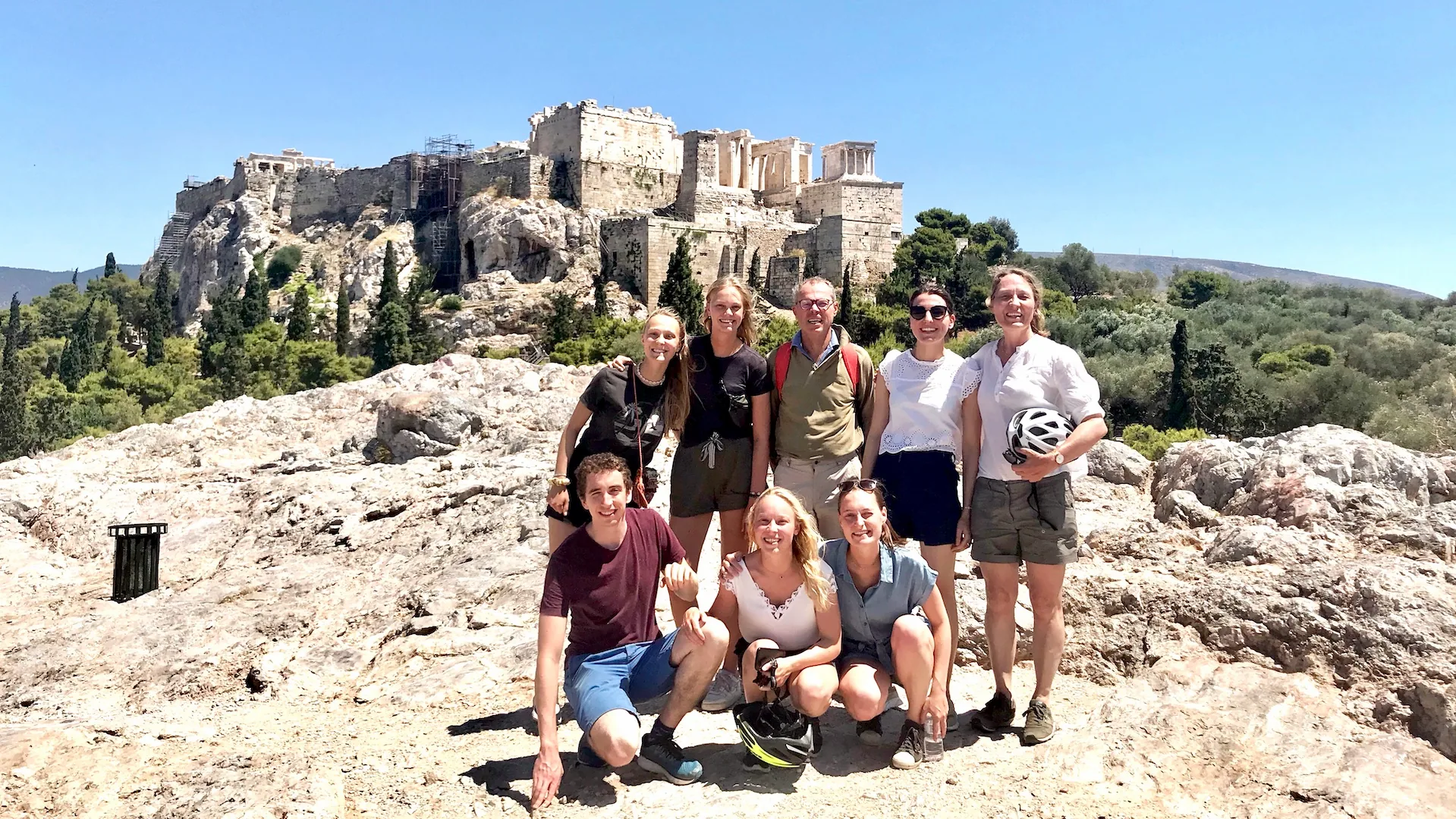
The Herodion area offers a calm, atmospheric stop just beneath one of Athens’ most iconic ancient landmarks. Photo: Sofia Souflaki.
A typical route for bike tours in Athens touches on a mix of ancient landmarks and everyday city life rather than sticking to just the postcard sites. Depending on the specific tour, you might pass:
Because a bike covers distance so much faster than walking, a single guided ride can realistically include sights that would otherwise take an entire day to see separately on foot.
This is usually the first concern for anyone considering guided bike rides in Athens, and it’s a reasonable one — Athens traffic can be intense on major roads. The key word, though, is “guided.” A well-run tour avoids busy avenues almost entirely, relying instead on pedestrian zones, parks, and quieter residential streets.
A few things tend to separate a safe, well-run tour from a risky one:
Riding independently is possible, but without that local knowledge, it’s easy to end up on a road you’d have preferred to avoid.
Not strictly, but it changes the experience significantly. Athens isn’t flat — hills around the Acropolis, the Pnyx, and several older neighborhoods can turn a standard bike ride into real physical effort, especially in summer heat. An electric bike’s pedal-assist removes most of that strain, letting you climb the same hills a regular cyclist would be struggling through, while still getting the exercise and open-air feel of riding yourself.
For most visitors — especially those without regular cycling experience — an eBike makes a guided ride accessible regardless of fitness level, without changing the fundamental experience of exploring the city by bike.
Group size affects the experience more than most people expect. Small group bike rides allow the guide to actually engage with each rider, adjust pace based on the group’s comfort level, and keep everyone together safely through narrow streets and busy crossings. Communication is easier, and stops feel less rushed.
Larger groups can be more budget-friendly, but they often move more slowly overall, make it harder to hear the guide clearly, and can feel more like following a crowd than exploring the city. If you want a more personal, attentive experience, it’s worth specifically looking for a small-group option rather than assuming all guided tours are structured the same way.
Guided bike rides tend to suit a fairly wide range of travellers, including:
If you value efficiency, safety, and storytelling over the freedom of setting your own pace entirely, a guided ride is likely to suit you better than exploring alone.
When comparing options, it’s tempting to book based on price alone. But the route matters just as much — a cheaper tour that sticks to busy roads and skips the most interesting neighborhoods isn’t necessarily a better deal than a slightly pricier one that’s thoughtfully planned around quiet streets and meaningful stops.
Before booking any guided bike rides, it’s worth checking exactly which landmarks are included, how large the group will be, and whether the route is designed specifically around safety and storytelling — not just getting from one photo stop to the next as quickly as possible.
Athens is not only a city to visit, but a city to feel, understand, and connect with. Through our tours and the guides we share here, we try to offer a useful and real sense of the city — its monuments, neighbourhoods, local life, hidden corners, and everyday rhythm — so you can explore it with curiosity, care, and a lighter footprint.
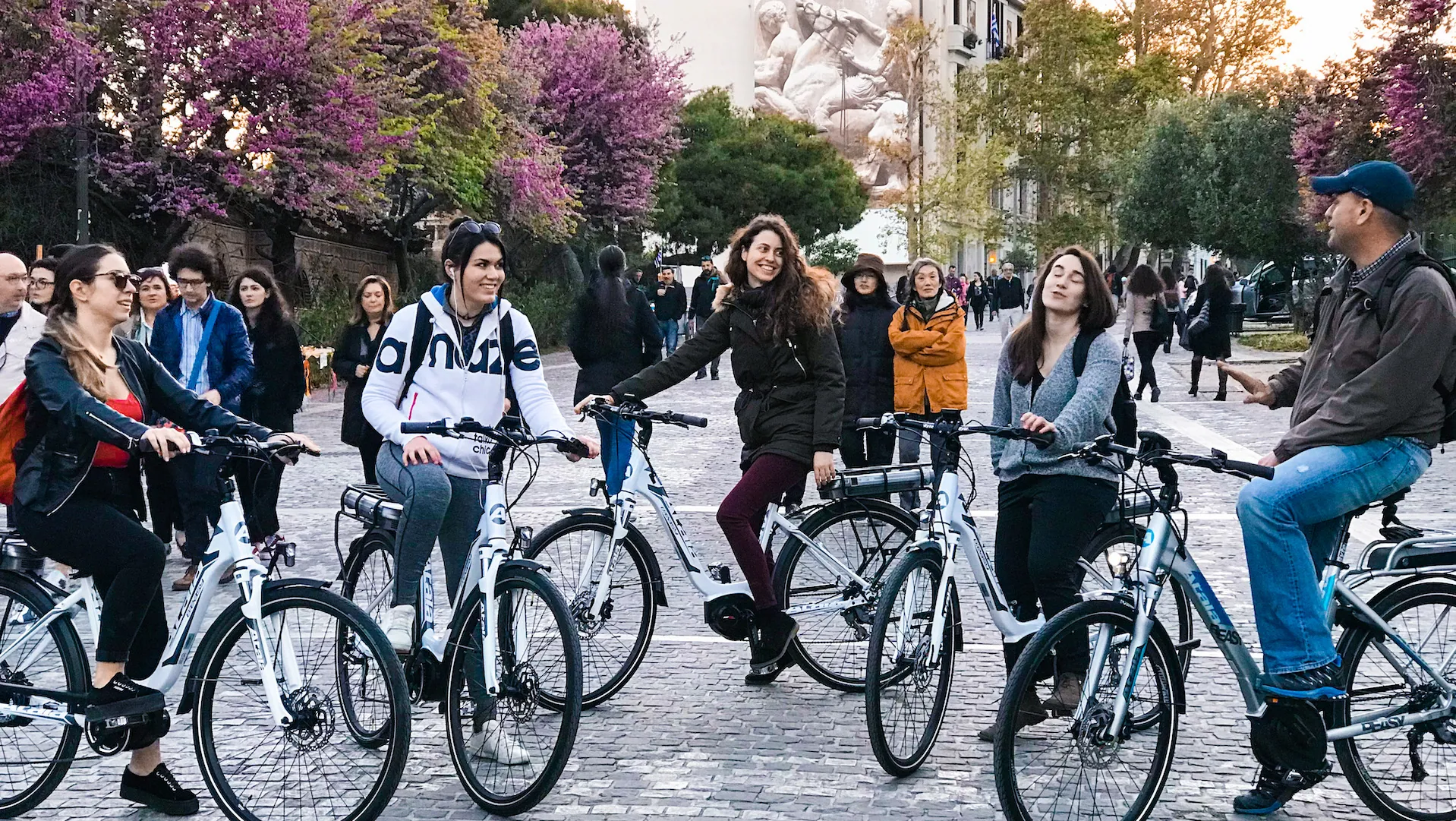
At Solebike, we believe Athens is best explored at a human pace. This post shares the thinking behind our small-group eBike tours: slow travel, local hosting, responsible riding, useful technology, respect for the city and the guest interactions that help us keep improving.
eBike sightseeing keeps the feeling of cycling while reducing the fitness pressure that can stop people from joining. This guide explains how electric assistance makes Athens more accessible for different ages, fitness levels and travel styles.








A huge thank you for this philosophy-themed bike tour of Athens. It was an enriching and unique experience, following in the footsteps of Socrates, Plato, and Aristotle, blending history, reflection, and exploration of the city.