Meet Costas, Solebike Co-Founder

eBike sightseeing keeps the feeling of cycling while reducing the fitness pressure that can stop people from joining. This guide explains how electric assistance makes Athens more accessible for different ages, fitness levels and travel styles.
A lot of visitors like the idea of exploring Athens by bike, and then quietly talk themselves out of it. Am I fit enough? Young enough? Confident enough on two wheels? Is this really for someone who hasn’t cycled seriously in years? These are honest, reasonable questions — and eBike sightseeing Athens experiences have genuinely changed the answer to most of them. An eBike doesn’t turn cycling into passive transport, but it does make sightseeing by bike accessible to a much wider range of people who can ride a regular bicycle and simply want a comfortable way to see the city.
It’s worth saying plainly: you still pedal. You still balance, steer, and brake, the same way you would on any bicycle. The electric motor supports your effort — it doesn’t replace it. This surprises a lot of first-time riders, who often expect something closer to a scooter or a small motorbike. It isn’t. It feels remarkably close to a regular bicycle, just with a gentle boost when you need it most.
That familiarity matters. Because the basic mechanics haven’t really changed, most people who can ride a normal bike feel comfortable on an eBike within the first few minutes — no steep learning curve, no unfamiliar controls to master before you can actually enjoy the ride.
Where the difference really shows up is in how the ride feels over time and terrain. Hills that would normally leave you out of breath become manageable. Longer routes that might otherwise feel daunting stop feeling like an endurance test. Riders with different fitness levels can move through the same route together, at a similar pace, without one person constantly waiting for another to catch up.
This shifts what the ride is actually about. Guests can focus more on the city around them — the architecture, the street life, the sightseeing — and less on how tired their legs are getting. It also lets a guide maintain a calmer, more even group rhythm throughout, without a wide gap opening up between stronger and weaker riders. The experience becomes more inclusive without becoming passive.
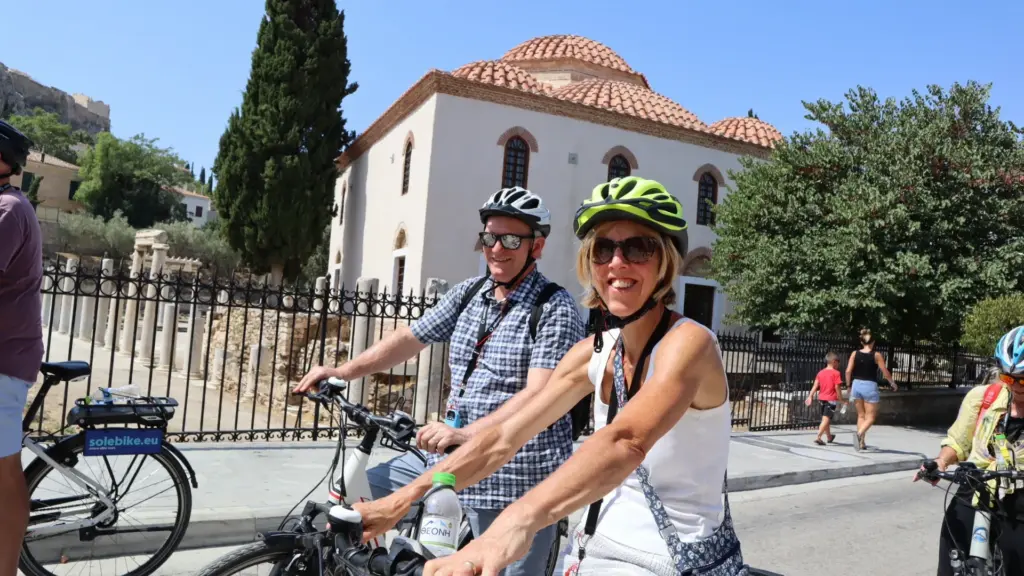
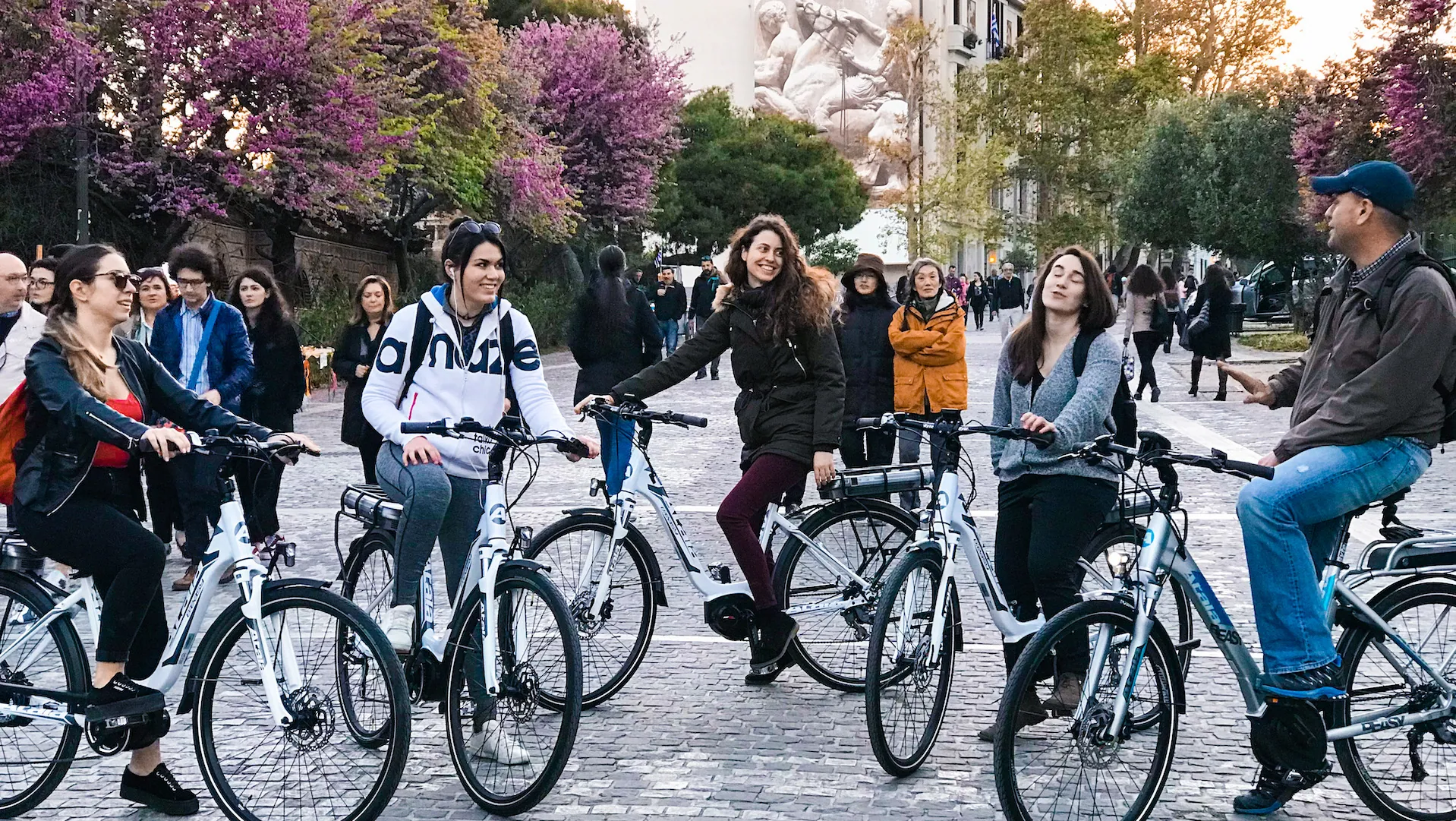
A relaxed ride past the Roman Agora, where Athens’ ancient landmarks are woven into everyday city life. Photo: Sofia Souflaki.
Traditional cycling, without assistance, can unintentionally favour fitter or more experienced riders — the person who trains regularly ends up pulling ahead, while someone less confident struggles to keep pace, often without saying so. Electric assistance narrows that gap considerably, letting couples, friends, and families with genuinely different fitness levels share the same route with a similar level of comfort.
In that sense, eBikes make city cycling more democratic: the ride becomes less about who is the strongest cyclist and more about who wants to discover the city. People who might have avoided a traditional bike tour altogether — worried about being the slowest in the group, or simply out of practice — often find themselves far more open to trying an eBike tour instead. The experience becomes less about performance and more about participation.
Many guided city sightseeing routes fall somewhere in the 8 to 15 kilometre range — long enough to feel genuinely rich and varied, but not extreme by any measure. On paper, that distance can sound like a lot to travellers who don’t consider themselves regular cyclists. In practice, electric assistance makes it considerably more approachable, letting guests feel active and engaged without feeling wiped out by the end.
The purpose here isn’t training or athletic achievement — it’s sightseeing and orientation, covered at a pace that actually lets you take things in. Naturally, how a specific route feels also depends on the city’s terrain, the day’s weather, and how thoughtfully the operator has designed the ride, so this range is best understood as a reasonable guide rather than a fixed promise for every tour.
Athens brings its own specific challenges to city cycling — real hills, warm weather for much of the year, scenic viewpoints that often sit above street level, and a historic centre with genuine distance between its highlights. Walking between areas like Kerameikos, Thissio, Plaka, the wider Acropolis surroundings, Zappeion, and the Panathenaic Stadium can be tiring, particularly in summer heat.
eBikes help connect these areas comfortably, without exhausting guests along the way. Just as importantly, visitors stay outdoors and genuinely connected to the city throughout — feeling the air, the sounds, and the shifting rhythm of each neighbourhood, rather than experiencing Athens as a series of stops glimpsed from inside a bus.
There’s something worth reflecting on here: good technology shouldn’t remove the human experience it’s meant to support. eBikes don’t replace curiosity, movement, or attention — the rider is still very much participating, still pedalling, still steering through the city’s streets. The experience of Athens is still felt through light, air, smells, and the everyday rhythm of its neighbourhoods, exactly as it would be on a regular bike.
The beauty of eBike sightseeing is that it keeps the feeling of cycling while removing much of the fitness pressure that can stop people from enjoying it. The technology’s role is a quiet one — reducing unnecessary physical strain so visitors can give more of their attention to the city itself, rather than to how tired they’re becoming.
Group dynamics change noticeably with electric assistance. Partners with different fitness levels can ride side by side rather than one constantly waiting on the other. Families with teenagers — often full of energy but not necessarily experienced cyclists — can keep pace more naturally. Mature travellers who want to stay active without pushing themselves too hard find the assistance genuinely welcome rather than merely convenient.
In a small-group setting, this more even pace also means less waiting around and less pressure to rush — the whole group tends to move together more smoothly, which makes it easier for a guide to manage the rhythm of the ride and keep everyone engaged with the views along the way. You can read more about how this plays out in practice on our page about how our Athens eBike tours work.
This style of touring tends to suit a genuinely wide range of visitors, including:
Being honest matters here too: this isn’t the right fit for someone who can’t ride a bicycle at all, or who isn’t comfortable with the basics of balancing, steering, and braking. Electric assistance supports effort — it doesn’t remove the need for basic cycling ability.
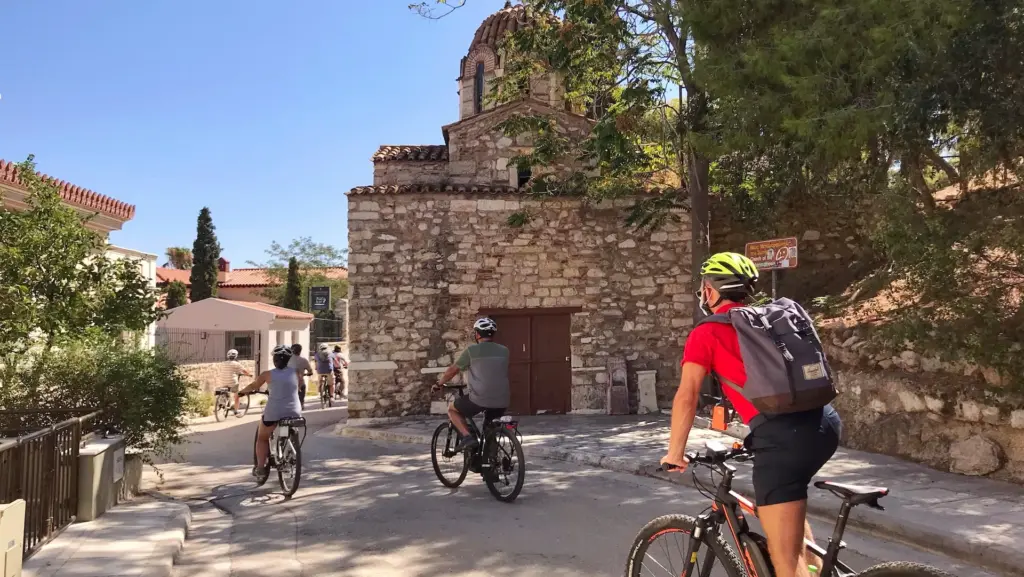
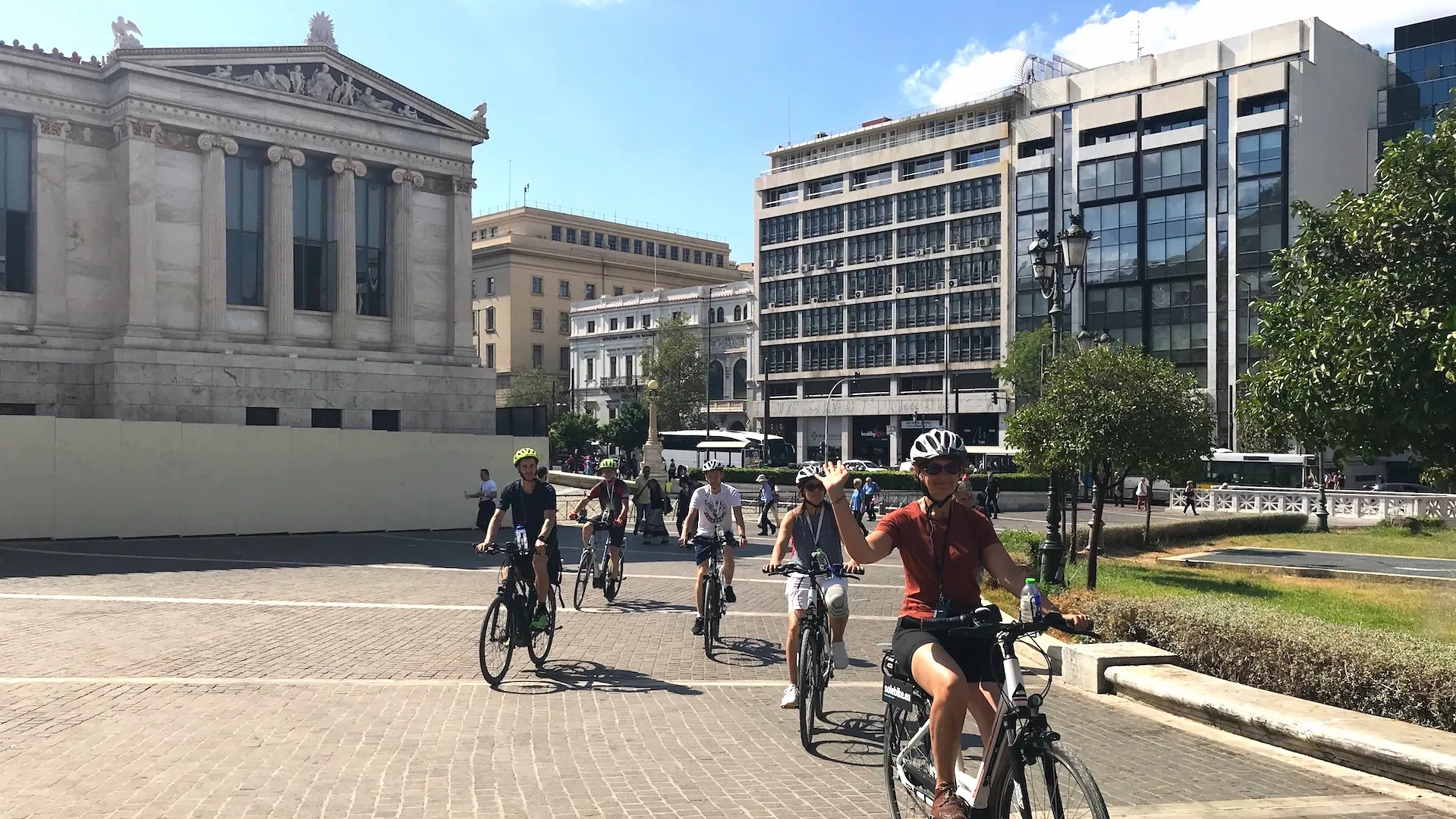
A scenic ride along the Acropolis north slope, where quiet lanes, old stone churches, and Athens history meet. Photo: Sofia Souflaki.
Building trust means being clear about the limits of what electric assistance actually does. Guests still need basic cycling confidence going in. Helmets, a proper safety briefing, thoughtful route design, and attentive guide support all still matter just as much as they would on a standard bike tour. Traffic awareness and respect for pedestrians remain essential throughout the ride, and weather or heat can still affect how comfortable a route feels on a given day.
In short, eBikes don’t make every route suitable for every person automatically. Responsible operators still need to design routes carefully, brief guests properly, and manage groups thoughtfully — the assistance is a meaningful improvement, not a substitute for good planning. For more on how we approach this, our Athens eBike safety FAQs cover the practical side in detail.
This is genuinely personal to how we work. We do not use eBikes just because they are trendy. We use them because they help more people experience Athens actively, comfortably and equally.
Our goal was never athletic cycling — it’s helping guests actually see Athens, with comfort and genuine context, at a pace that doesn’t turn the day into a workout. eBikes let people enjoy the route without constantly worrying about whether they’re fit enough to keep up, which in turn supports a more relaxed, more genuinely inclusive sightseeing experience for the whole group. Whether that’s on our 9:15 eBike Tour in Athens, a family-friendly eBike tour in Athens, or a fully private and custom Athens tour built around a specific group’s needs, the underlying idea stays the same.
eBike sightseeing opens up city cycling to far more people, while keeping the active, genuinely human feeling of a bicycle ride intact. It makes Athens easier to connect, easier to enjoy, and easier to share between people of quite different fitness levels — without turning the day into a competition. The best part isn’t speed. It’s access, comfort, and the simple ability to participate, whoever you are.
Explore our full range of Athens eBike tours, start with the 9:15 eBike Tour in Athens for a comfortable first ride, read more about how our Athens eBike tours work, check our Athens eBike safety FAQs before you book, or choose a private and custom Athens tour if you’d like a more tailored pace for your group.
Generally yes, provided you’re comfortable riding a regular bicycle — the electric assistance makes the experience noticeably easier without requiring prior eBike experience.
Not particularly. Pedal assist removes much of the physical strain, though you should still be comfortable with basic cycling like balancing and braking.
Not fundamentally — you still pedal, steer, and brake the same way. The motor simply supports your effort, particularly on hills or longer stretches.
Yes, this is one of the main benefits — electric assistance narrows the gap between stronger and less experienced riders, letting groups move together more comfortably.
Many guided routes fall somewhere between 8 and 15 kilometres, though exact distance can vary depending on the specific tour.
Often yes, particularly for families with teenagers, since the assistance helps keep pace more even across different ages and energy levels.
An eBike tour likely isn’t the right fit in that case — basic cycling confidence is still needed. A self-guided audio tour may be a better alternative.
It can be, particularly for larger gaps in ability, since a private tour allows the pace and route to be adjusted specifically around your group.
Athens is not only a city to visit, but a city to feel, understand, and connect with. Through our tours and the guides we share here, we try to offer a useful and real sense of the city — its monuments, neighbourhoods, local life, hidden corners, and everyday rhythm — so you can explore it with curiosity, care, and a lighter footprint.
At Solebike, we believe Athens is best explored at a human pace. This post shares the thinking behind our small-group eBike tours: slow travel, local hosting, responsible riding, useful technology, respect for the city and the guest interactions that help us keep improving.
In a busy city like Athens, group size can shape the whole experience. This guide explains why small-group eBike tours often feel calmer, more personal and easier to enjoy, especially for first-time visitors, families and travellers who prefer a relaxed pace.








A huge thank you for this philosophy-themed bike tour of Athens. It was an enriching and unique experience, following in the footsteps of Socrates, Plato, and Aristotle, blending history, reflection, and exploration of the city.