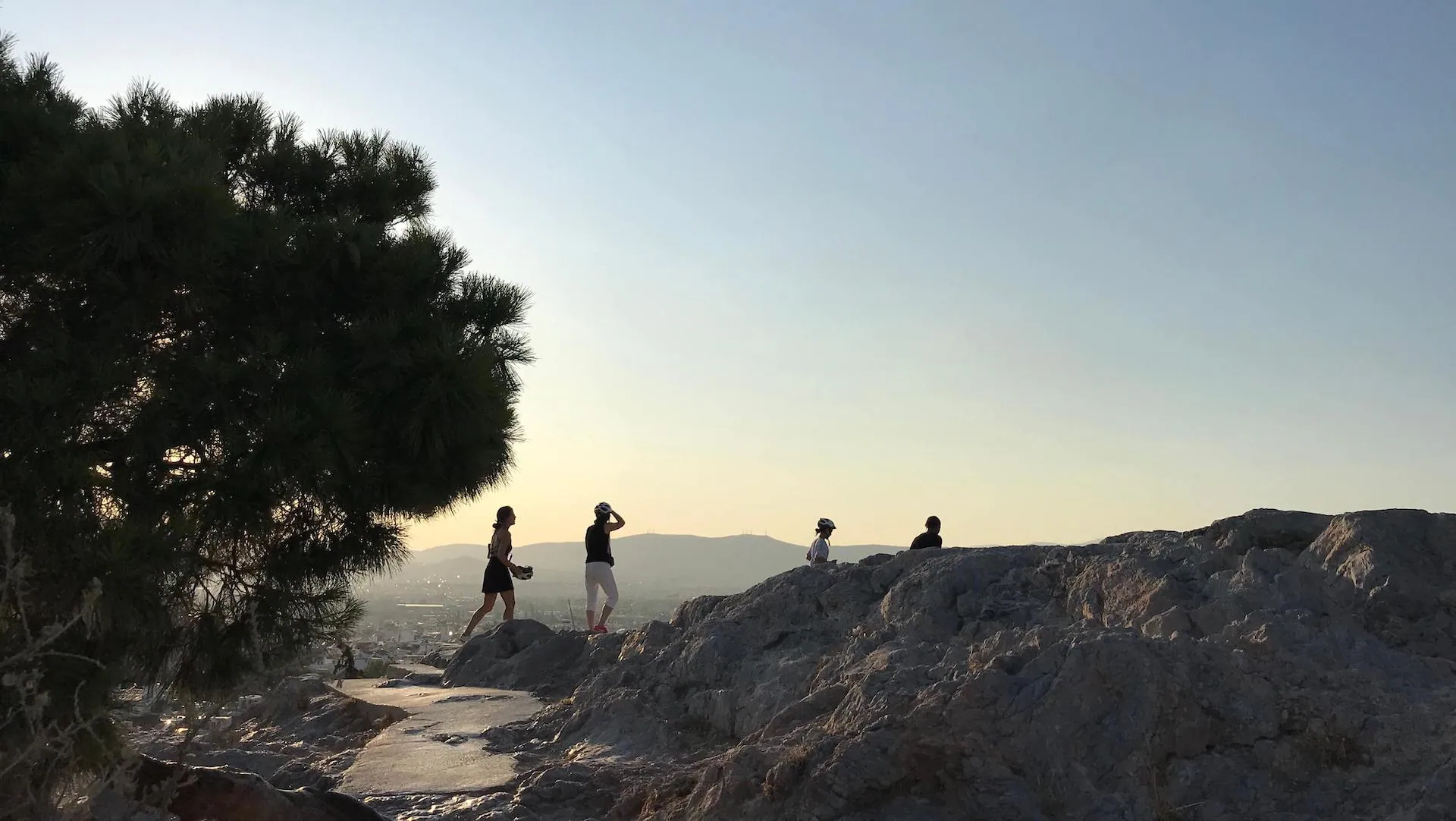
Meet Costas, Solebike Co-Founder

Plaka is known as the pretty old neighbourhood below the Acropolis, but its smaller streets — Tripodon, Lisiou, Mnisikleous and Tholou — hold a deeper story of ancient theatre, lost nightlife and a city that never stopped reshaping itself.
Plaka is often seen as the beautiful old neighbourhood below the Acropolis — a place of narrow streets, flowers, tavernas, souvenir shops and photographs. But if you slow down, streets like Tripodon, Lisiou, Mnisikleous and Tholou begin to tell a deeper story. They are not only passages for visitors. They are part of the long residential heart of Athens, an area where people have lived, moved, gathered, celebrated, resisted and reshaped the city for thousands of years.
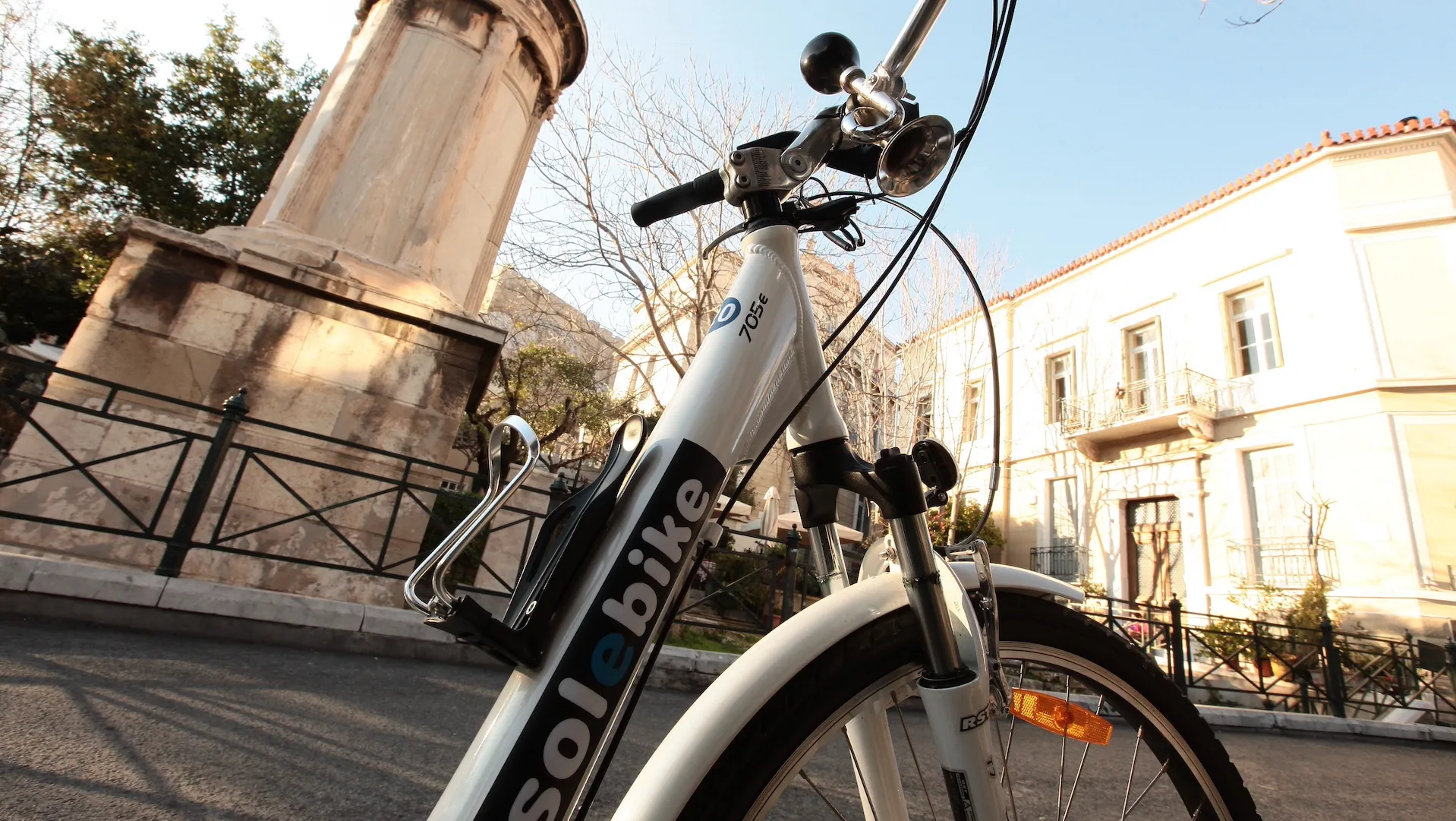
Tripodon carries the most ancient and ceremonial memory of this walk, but its story did not stop in antiquity. Often described as one of the oldest streets in Athens, it is connected with the world of ancient theatre, Dionysian celebrations, public honour and the choragic monuments that once displayed the prizes of artistic competitions. The Monument of Lysicrates still gives the street a rare dignity — a reminder of a time when Athens celebrated art, performance and civic pride in public space.
But the monument also lived other lives. From the 17th to the 19th century, it became part of the French Capuchin monastery that stood in the area, and tradition says it was used by the monks as a library or reading room. The monastery itself became a small but memorable chapter of later Athenian life: Lord Byron stayed there, the Capuchin monks were remembered with affection for supporting locals during periods of illness and hunger, and local stories even connect them with the arrival of the tomato plant in Athens. There is also a charming old anecdote about a monk bringing a doll whose eyes closed when it lay down — a small “miraculous” curiosity that attracted many Athenians to come and see it.
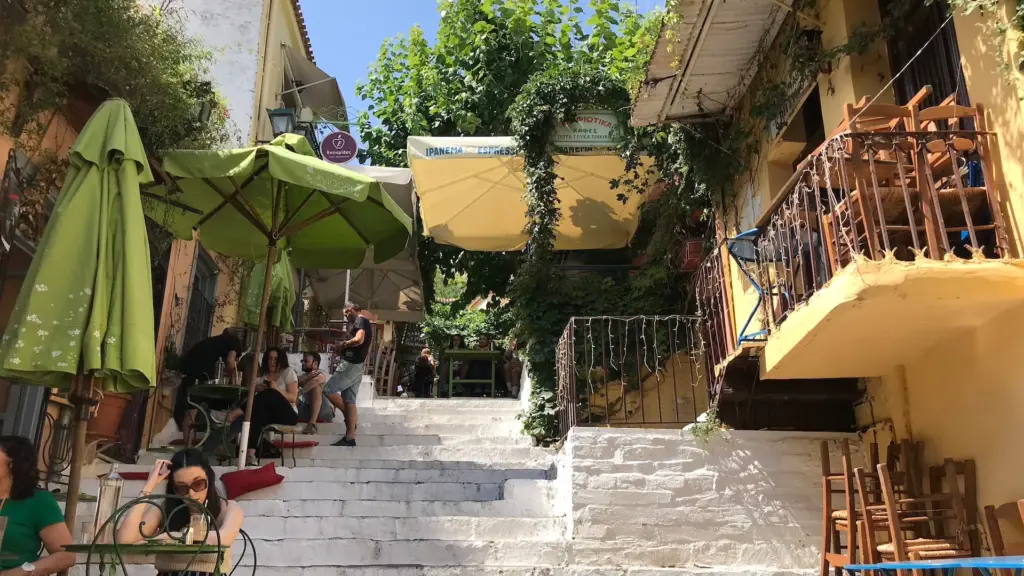
A lively Plaka corner where café tables, narrow steps, and local atmosphere show Athens beyond the Acropolis. Photo: Sofia Souflaki.
A few steps away, Lisiou, Mnisikleous and Tholou carry another Athens. In the 1970s and 1980s, these streets were remembered for rock clubs, disco nights, punk energy, alternative crowds and some of the early gay bars of the city. This history is less visible today. It does not stand in marble like Tripodon. It survives more through stories, memories, old addresses and the feeling that these streets once gave space to people searching for music, freedom, identity and expression.
Today, these same streets are busy and touristic. They host cafés, restaurants, shops, guesthouses and all kinds of visitor businesses. But they have not lost their character. Their old houses still speak: some beautifully renovated, some polished and elegant, some wounded by time, others standing quietly between abandonment and survival. Together they create that very special Plaka atmosphere — distinguished but humble, theatrical but everyday, almost like a fading prima donna that still knows exactly how to hold the stage.
That is the beauty of this small area. It is not only about monuments, and it is not only about nightlife nostalgia. It is about how Athens keeps layering itself. Conquerors, wars, catastrophes, decline and rebuilding have all passed through the city, yet Athens always seems to find a new character, a new sound, a new way to resist disappearance. Sometimes that resistance is a monument. Sometimes it is a house that survived. Sometimes it is music coming from a basement, a family business still open on a corner, or a narrow street that continues to welcome people after thousands of years.
This is why Plaka may be busy, but behind the noise there is still a rare sense of place. Millions of feet have crossed these streets, and still they stand beautiful, imperfect and inviting. They ask visitors to go beyond the Acropolis photo and enter the smaller alleys, where the city explains itself more quietly. Athens has always been a true host: wounded sometimes, glorious sometimes, chaotic often, but still open, still generous, still able to inspire.
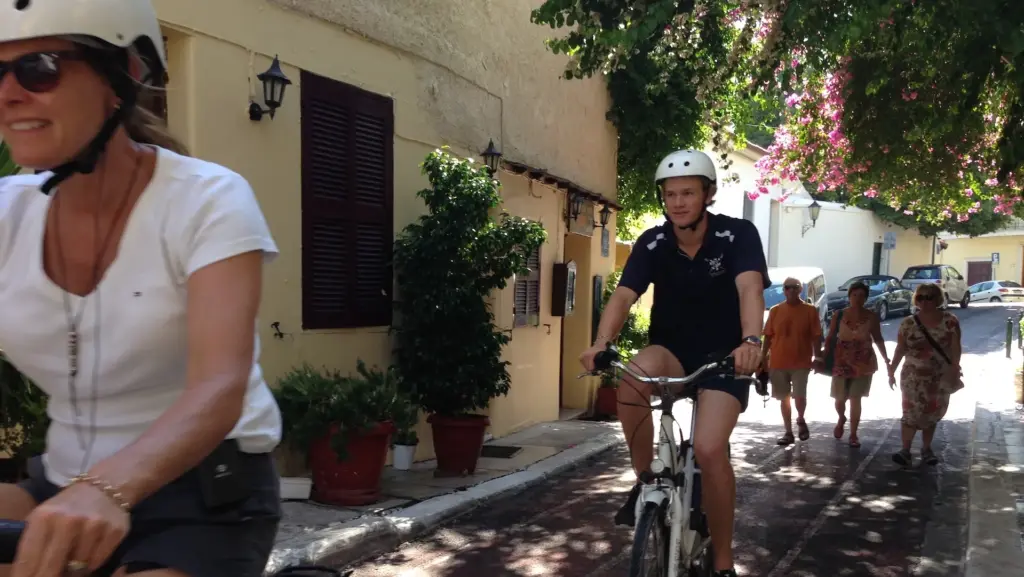
A relaxed Plaka ride through Lysiou Street, where local life, greenery, and historic streets still shape Athens today. Photo: Sofia Souflaki.
You can explore these streets on foot, slowly, letting the details appear one by one. For us at Solebike, they are also part of the wider feeling of our 9.15 Athens Morning eBike Tour. We ride many of these streets and touch this neighbourhood gently, connecting Plaka with the Acropolis area, Thissio, Kerameikos, Zappeion and the rest of the historic centre. Not to rush through it, but to help guests understand how the city’s layers sit beside each other.
This is why Plaka remains a must-see, but also a must-feel place. Beyond the Acropolis and the famous monuments, these streets reveal something more intimate: the long life of Athens as a city of residents, stories, houses, music, memory and change. History here is not locked in one period. It is still moving, still living, still welcoming people through the same narrow streets.
Monument of Lysicrates — history and cultural context
https://www.iefimerida.gr/stories/thrylika-rok-stekia-stin-plaka-tis-diktatorias
“Athina”, Thanasis Yohalas and Tonia Kafetzaki
“ΑΘΗΝΑ, Ιχνηλατώντας την πόλη με οδηγό την ιστορία και τη λογοτεχνία”, Θανάσης Γιοχάλας και Τόνια Καφετζάκη.
A favourite Greek-language book we often return to for old Athens anecdotes, neighbourhood memories and the small stories that help the city feel alive beyond its monuments – Hestia Publishers & Booksellers
View the publisher page
Βιβλιοπωλείον της ΕΣΤΙΑΣ.
This series shares the Athens neighbourhoods we keep returning to — places where history, local life, architecture, views and everyday rhythm meet. These are not complete historical guides, but personal notes from the city we move through every day and love sharing with our guests.
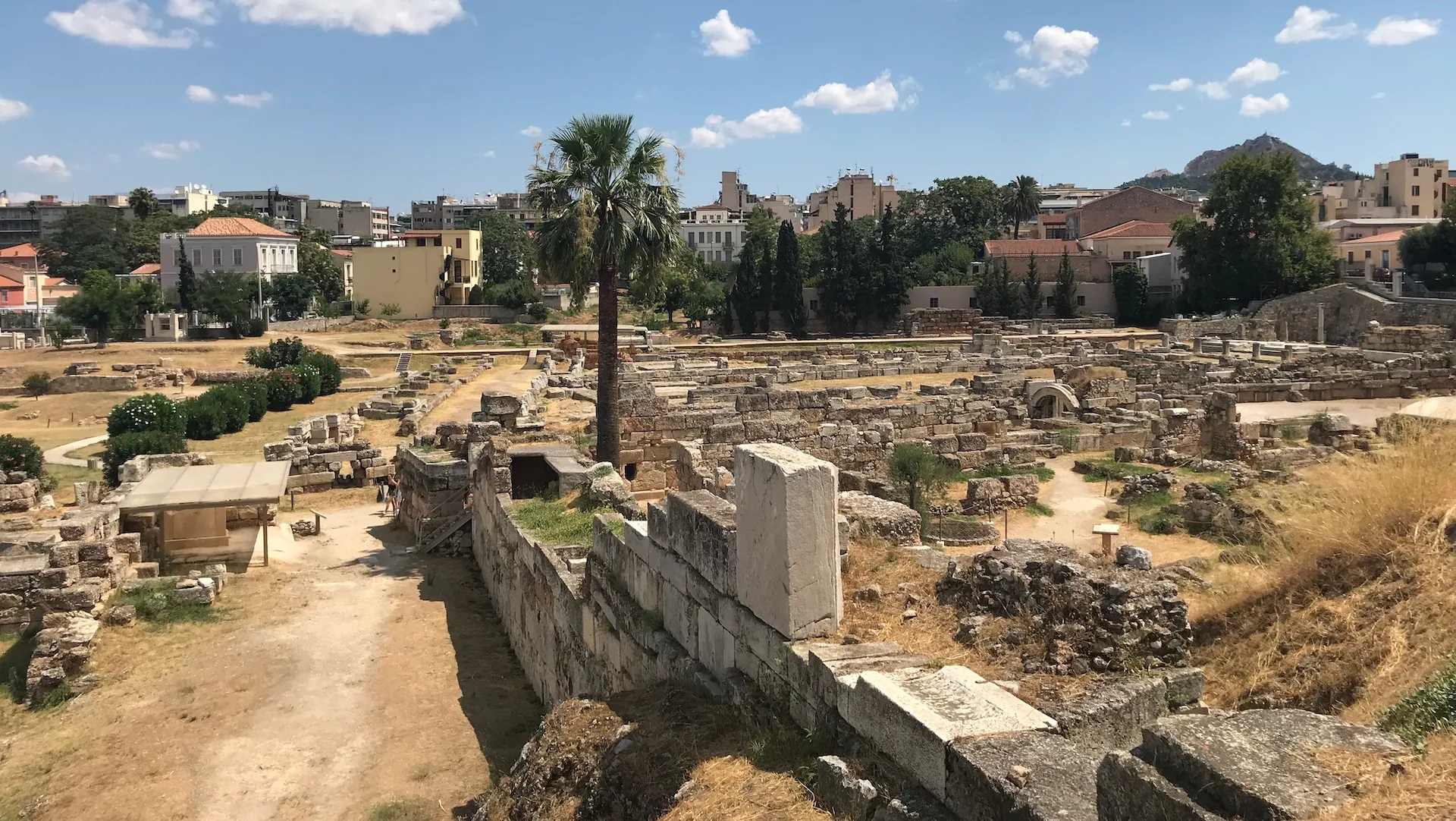
Kerameikos is often passed by on the way to Thissio, Monastiraki, or Gazi, but this quiet archaeological site reveals a deeply human side of Athens. Through clay, pottery, burial customs, ancient roads, the Eridanos River, and later city layers, Kerameikos helps us see Athens from the ground up.
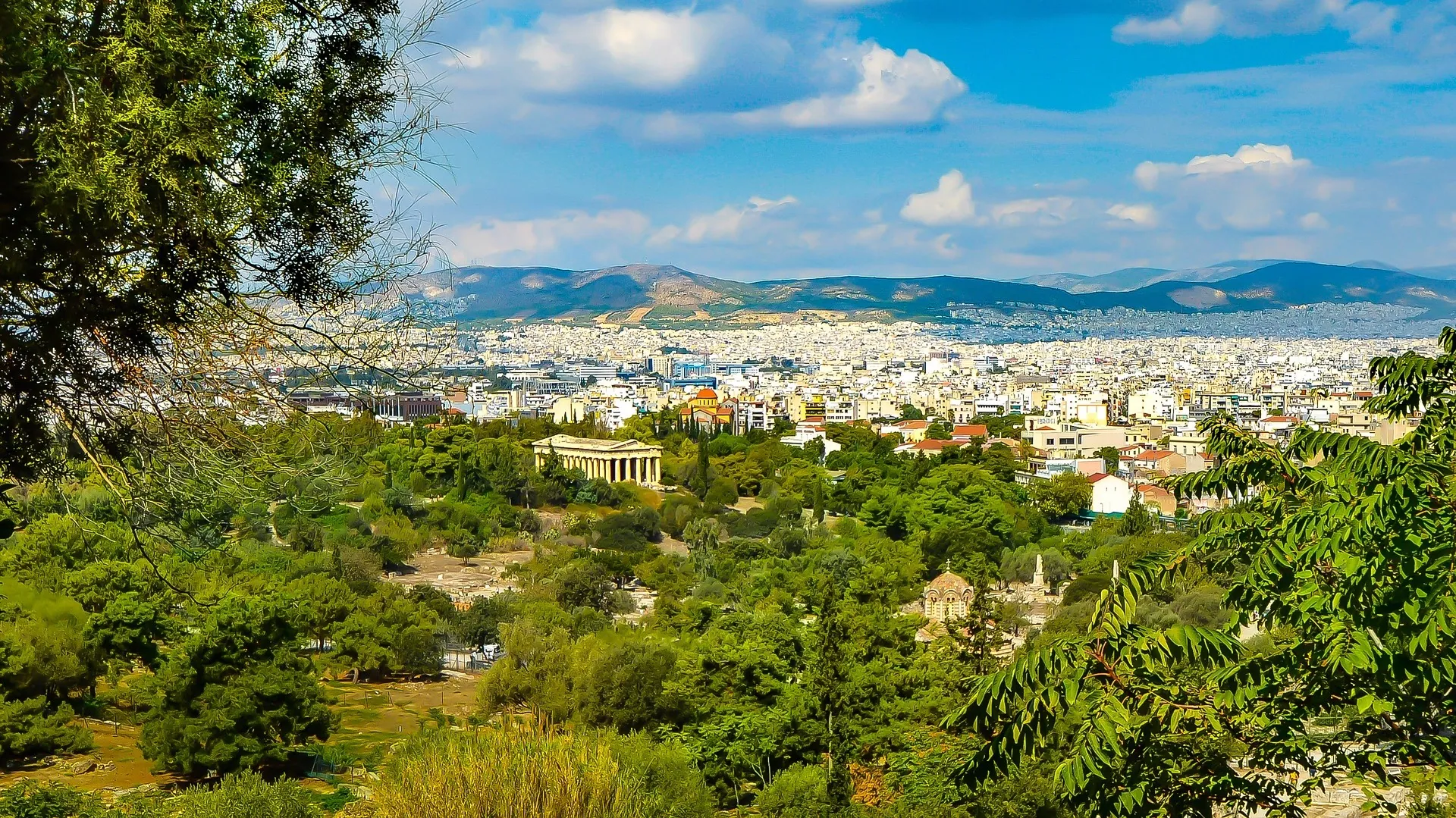
Thissio is one of those Athens neighbourhoods where everyday life and ancient history sit quietly side by side. From Acropolis views and old railway traces to neoclassical houses, cafés, open-air cinema and local stories, this guide shares why Thissio is best experienced slowly.







A huge thank you for this philosophy-themed bike tour of Athens. It was an enriching and unique experience, following in the footsteps of Socrates, Plato, and Aristotle, blending history, reflection, and exploration of the city.