
Meet Costas, Solebike Co-Founder

Standing on the Areopagus is more than enjoying a view over Athens. From this bare rock, the city opens as a landscape of justice, myth, faith, and memory — from the trial of Orestes to Paul’s speech to the Athenians.
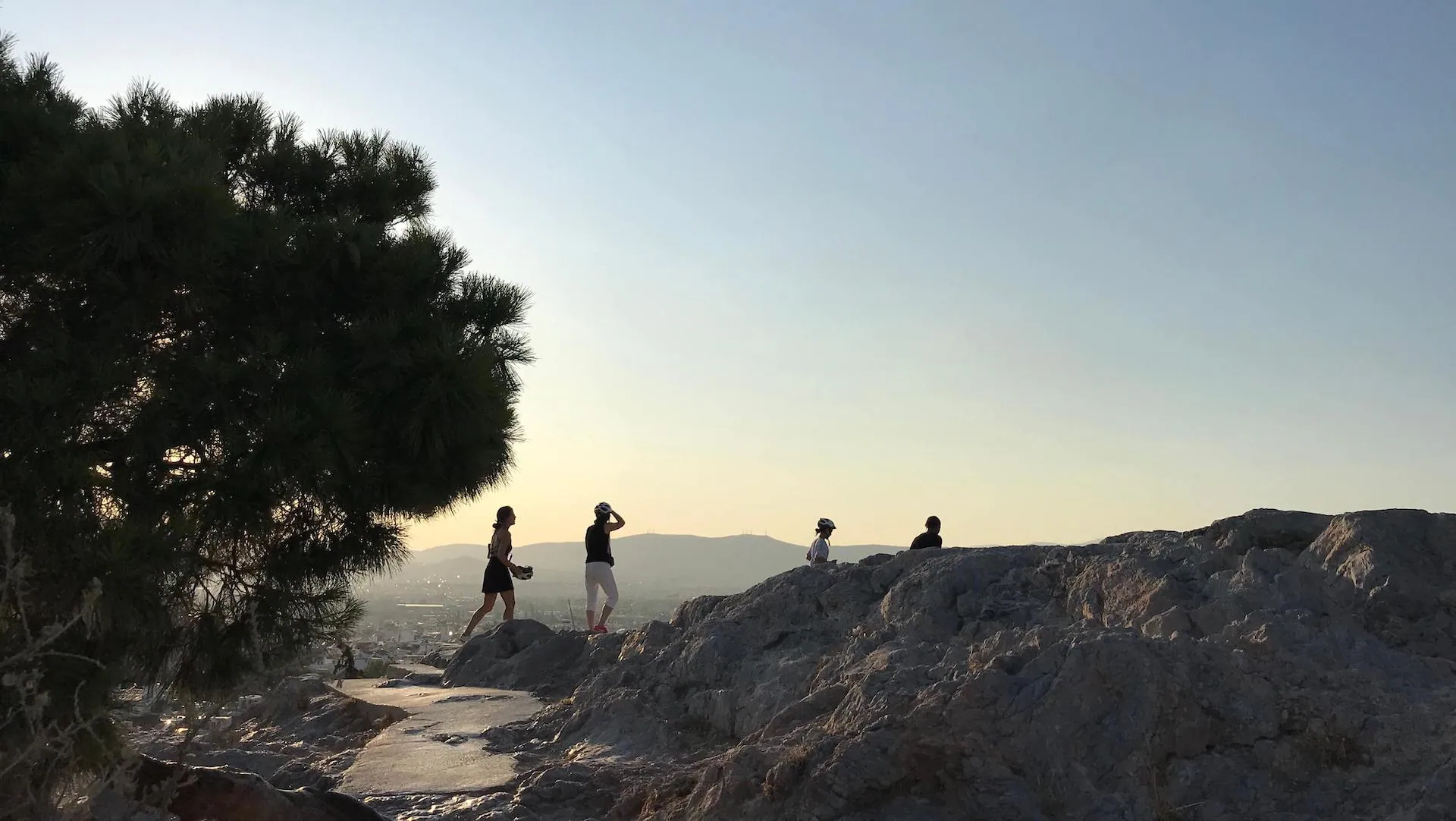
The hill is bare. No roof, no walls, no court building. Only the rock of the Areopagus, the open sky, the Acropolis nearby, and Athens spread below. The judges sit in silence. Spectators stand at a distance.
The accused stands on one side: Orestes, son of Agamemnon. He has killed his mother, Clytemnestra, to avenge the murder of his father.
Opposite him stand The Furies (Erinyes), ancient spirits of blood and family revenge. They are not ordinary prosecutors. They are terrifying witnesses of the old law: blood must answer blood.
Nearby stands Apollo, bright and firm, protector of Orestes. He does not deny the killing. He argues that Orestes acted under divine command, to punish a greater crime.
Then Athena arrives. This is her city, and she does not decide the matter alone. Instead, she has created the court. Archons of Athens take their places as judges. The first great trial for blood has begun.
Trial Characters:
Orestes — the accused
The Furies — the prosecutors
Apollo — defender of Orestes
Athena — founder of the court
The Judges — former archons, chief magistrates
Spectators — Athenian citizens standing at a distance
THE FURIES
stepping forward
Here stands a son who killed the woman who gave him life. No house, no city, no god should protect him from this. If a mother’s blood can be spilled without punishment, then the oldest laws are broken.
ORESTES
lowering his head
Yes, I killed her. But she killed my father first. Agamemnon returned from war and was murdered in his own house. I did what I was commanded to do. I avenged my father.
THE FURIES
turning toward the judges
Do you hear him? He admits the blood. Let him not hide behind words.
APOLLO
stepping forward
Orestes did not act from madness or greed. He obeyed justice. Clytemnestra murdered her husband, the king, the father. If the father’s blood means nothing, what order remains?
STAGE DIRECTION
The judges listen in silence. Around them, people stand at a distance: citizens, relatives, curious Athenians, perhaps afraid even to breathe loudly. This is not a noisy public spectacle. It feels like the city itself is holding still.
THE FURIES
darker now
We are older than your new gods, Apollo. Older than your bright temples and polished laws. We remember what families owe to the dead. We follow the blood that cries from the earth.
ATHENA
raising her hand
Enough. The words have been spoken. Let the judges cast their votes.
STAGE DIRECTION
The judges vote. One by one, the ballots are counted.
The number is equal.
For a moment, the hill is silent.
ATHENA
with authority
I give my vote for Orestes.
With that, Orestes is acquitted.
The Furies rage. Their old justice has been challenged. But Athena does not simply defeat them. She persuades them to remain in Athens, not as forces of blind revenge, but as honoured powers beneath the city’s justice.
And so, on the rock of the Areopagus, the story becomes more than the fate of one man. It becomes the moment where revenge begins to turn into law, where fear is given a place, and where Athens imagines justice not as silence after blood, but as judgement spoken in the open air.
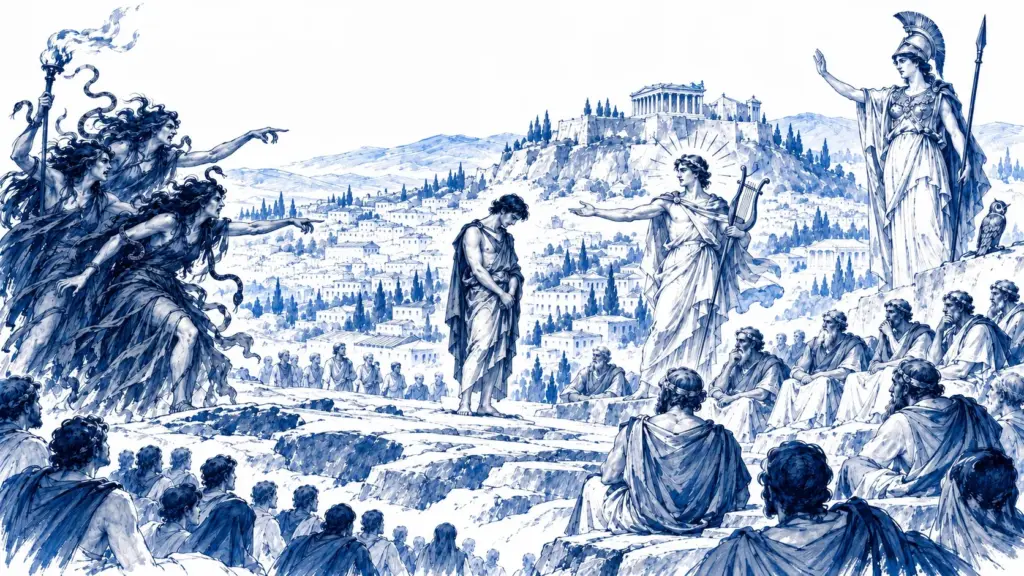
A mythological illustration of the Trial of Orestes on Areopagus Hill, where Athena’s judgment became one of Athens’ legendary foundations of justice. AI-assisted illustration: Solebike.
I’m asking myself; why hold a homicide court on this rock, and not somewhere easier, flatter, or more comfortable?
We can still picture it today, a rough rocky small plateau, a stone for the accused (Hybris) and another for the prosecutor (Anaideia), in the open air connected with the idea that the judges and accuser should not be under the same roof as a person polluted by blood guilt.
We cannot know every practical reason with certainty. But standing on the Areopagus today, it is difficult not to feel that the place itself adds weight to the idea of justice. To reach the top, you leave the ordinary level of the city for a moment. You climb above the comfort of the streets, but you do not escape Athens. The city remains all around you: the Acropolis, the Agora, the roads, the direction of Kerameikos, and the places of worship, trade, memory, and daily life.
This position feels powerful. The Areopagus stands below the Acropolis, under the presence of the divine, but above the Agora, where the common life of the city unfolded. It is not fully removed from human affairs, but it is lifted above their instincts. Justice, in this setting, seems to stand between gods and citizens, between higher order and daily conflict.
Perhaps this is part of the power of the place. Justice was not practiced in comfort. It required effort, attention, and distance from immediate anger. A person standing there had to rise above the personal wound, the family revenge, the private fear, and look toward something larger: the order of the city, the responsibility of judgement, and the difficult balance between human pain and common law.
This is why the story of Orestes feels so connected to the rock itself. His trial is not only about guilt or innocence. It is about the movement from revenge to law, from the private cry of blood to the shared responsibility of the city. The Areopagus does not feel like a convenient place. It feels like a demanding one. And maybe that is why it still speaks to us: it reminds us that justice is not only a decision, but an ascent — from instinct to reason, from anger to judgement, from pain to order.
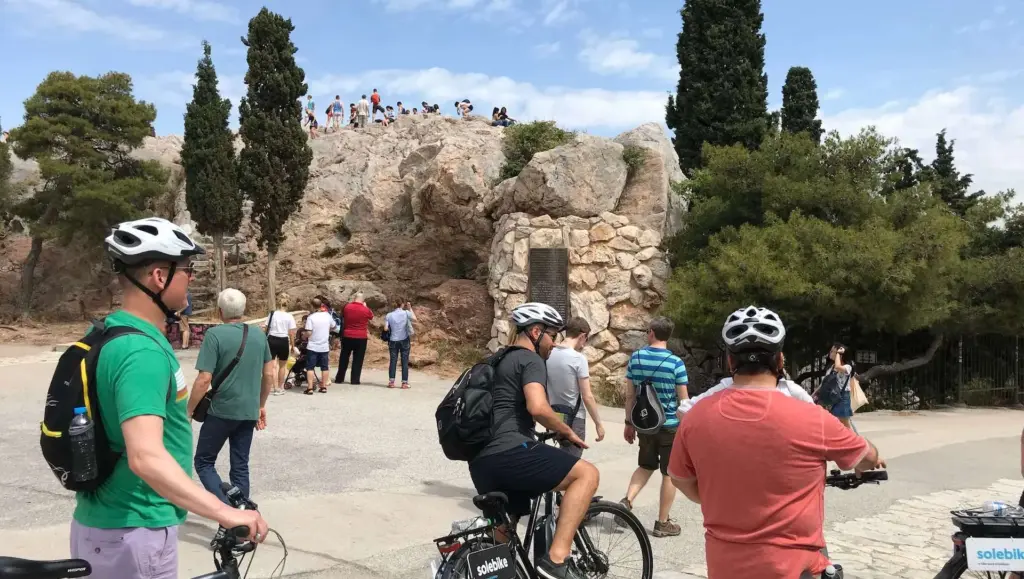
An eBike stop at Areopagus Hill, where visitors climb the ancient rock for views and a closer look at Athens’ layered past. Photo: Sofia Souflaki.
As I walk away from the Areopagus, another story comes to mind.
Centuries after the world of Aeschylus and Orestes, Paul also stood here — or at least in this place of Athenian judgement and discussion — and spoke to the Athenians about Christianity. According to the Book of Acts, he had walked through the city, noticed its many objects of worship, and referred to an altar dedicated “to an unknown god.”
For me, this adds another layer to the Areopagus. The same rock that carries the memory of ancient homicide trials also becomes connected with one of the first Christian messages addressed to Athens. Areopagus is not just a place of law, but a place where worldviews meet, Athens seems to pass from one religious age to another: from the twelve gods and the older sacred order, toward the language of Christianity that would later reshape the city.
Perhaps this is why the hill feels heavier than its size. It is a small rock, but it holds large questions: guilt and justice, revenge and law, gods and citizens, old worship and new faith. Walking away from it, you do not only leave a viewpoint. You leave a place where Athens seems to have argued with itself about what justice is, what truth is, and where the divine can be found.
These are the kinds of places that make Athens more meaningful when you move through the city slowly. Our 9:15 Athens eBike tour follows this same rhythm, connecting views, stories, and quiet details that are easy to miss when you rush.
This series shares the Athens neighbourhoods we keep returning to — places where history, local life, architecture, views and everyday rhythm meet. These are not complete historical guides, but personal notes from the city we move through every day and love sharing with our guests.
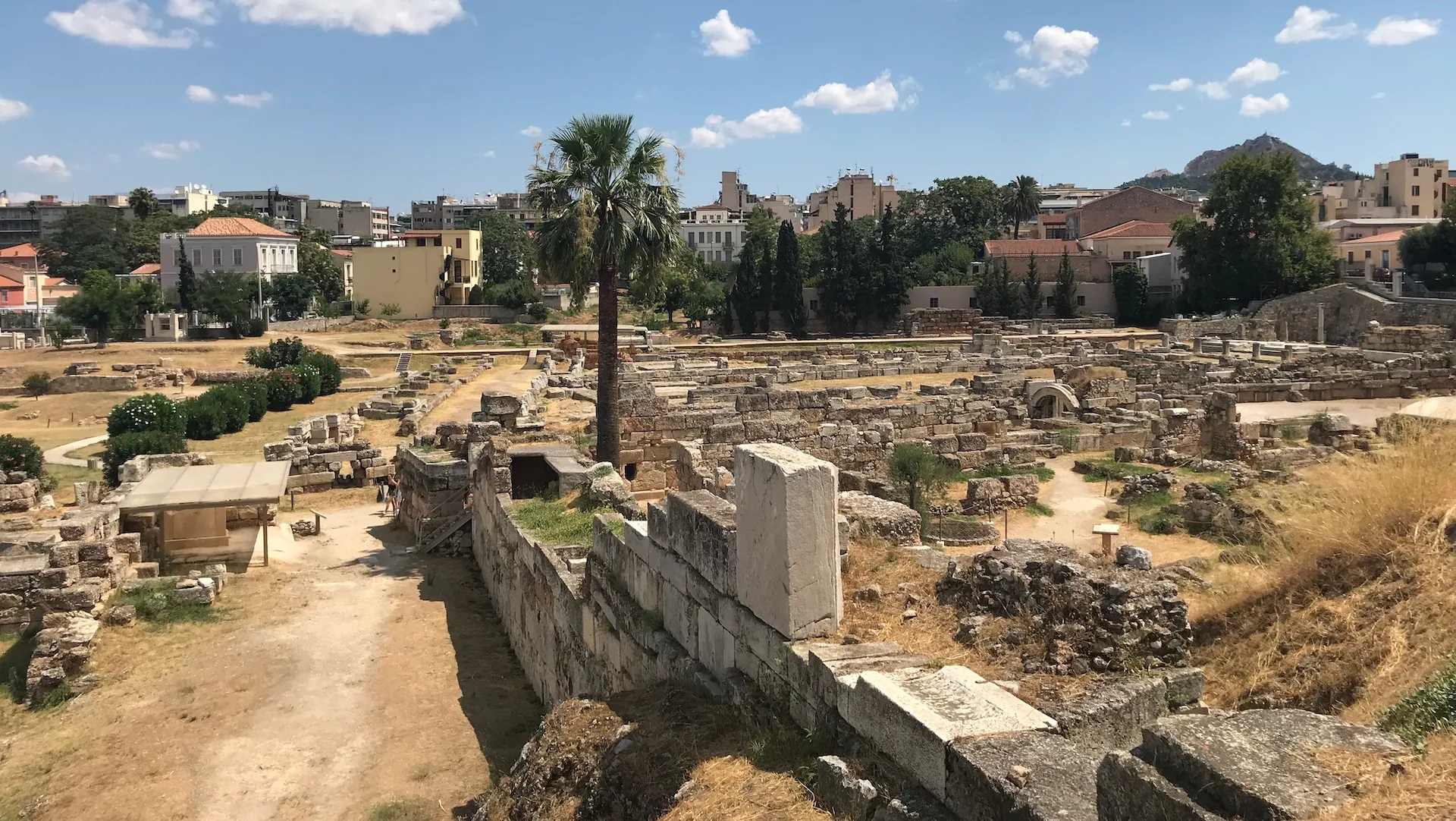
Kerameikos is often passed by on the way to Thissio, Monastiraki, or Gazi, but this quiet archaeological site reveals a deeply human side of Athens. Through clay, pottery, burial customs, ancient roads, the Eridanos River, and later city layers, Kerameikos helps us see Athens from the ground up.
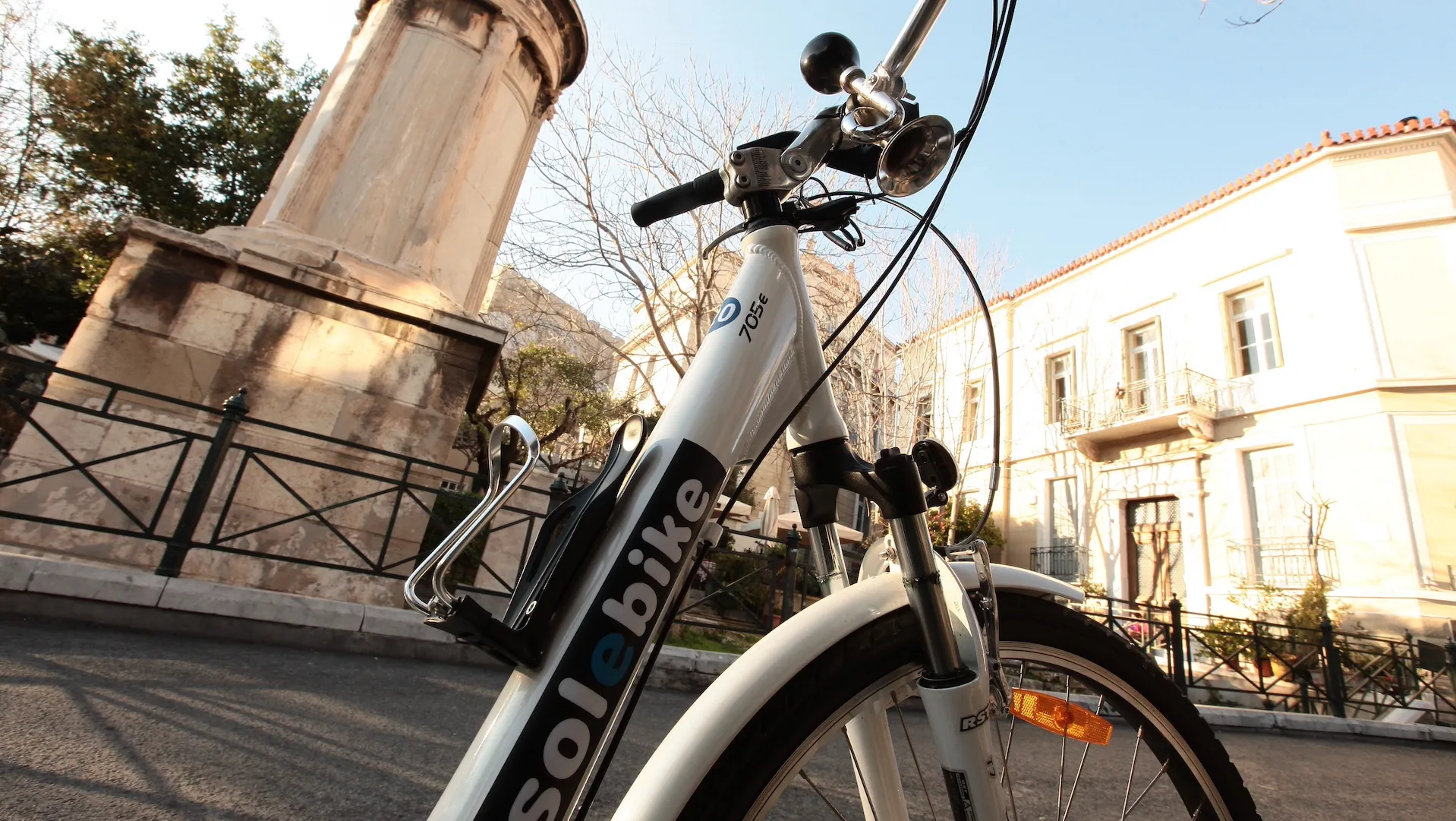
Plaka is known as the pretty old neighbourhood below the Acropolis, but its smaller streets — Tripodon, Lisiou, Mnisikleous and Tholou — hold a deeper story of ancient theatre, lost nightlife and a city that never stopped reshaping itself.
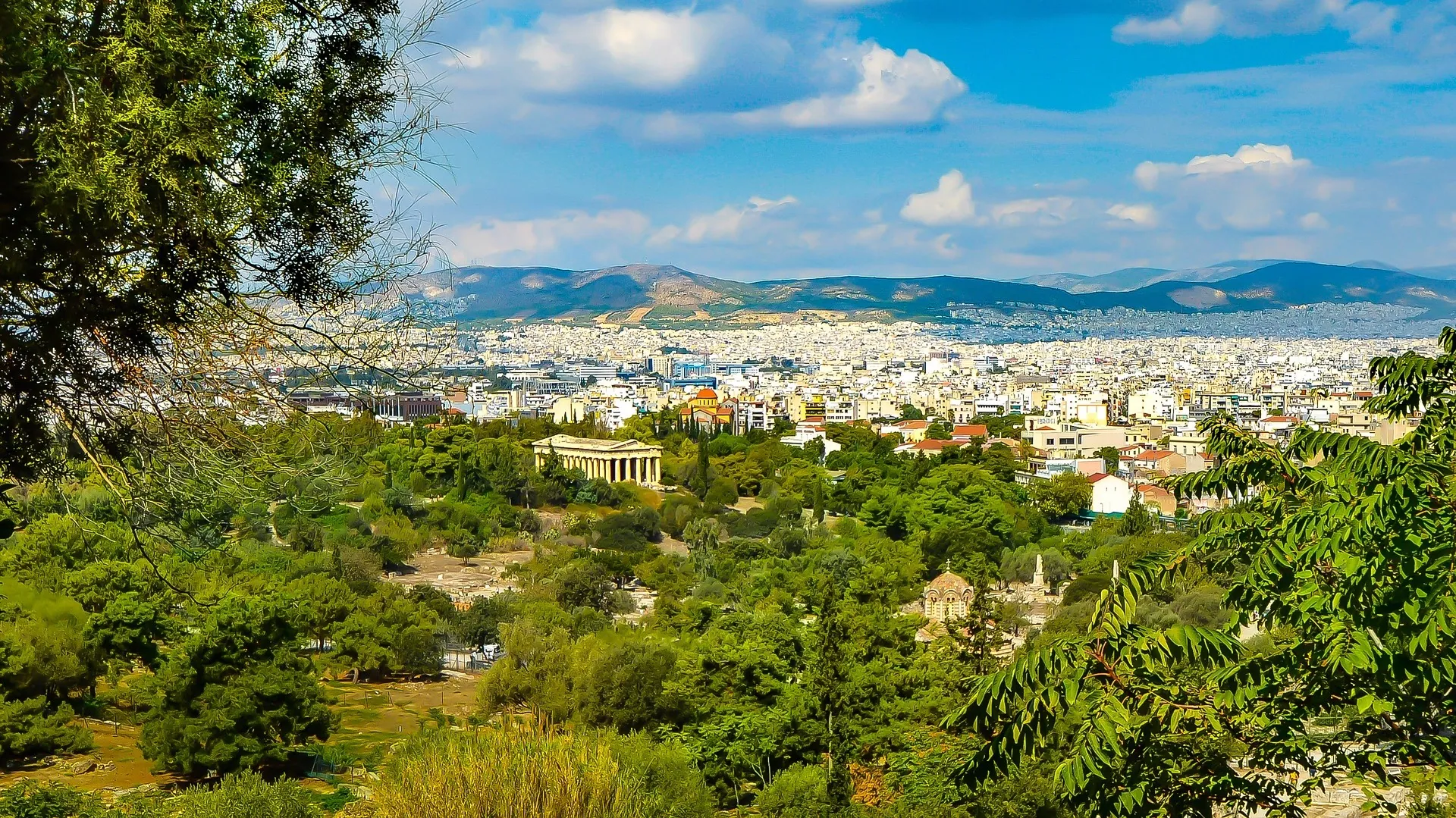
Thissio is one of those Athens neighbourhoods where everyday life and ancient history sit quietly side by side. From Acropolis views and old railway traces to neoclassical houses, cafés, open-air cinema and local stories, this guide shares why Thissio is best experienced slowly.








A huge thank you for this philosophy-themed bike tour of Athens. It was an enriching and unique experience, following in the footsteps of Socrates, Plato, and Aristotle, blending history, reflection, and exploration of the city.