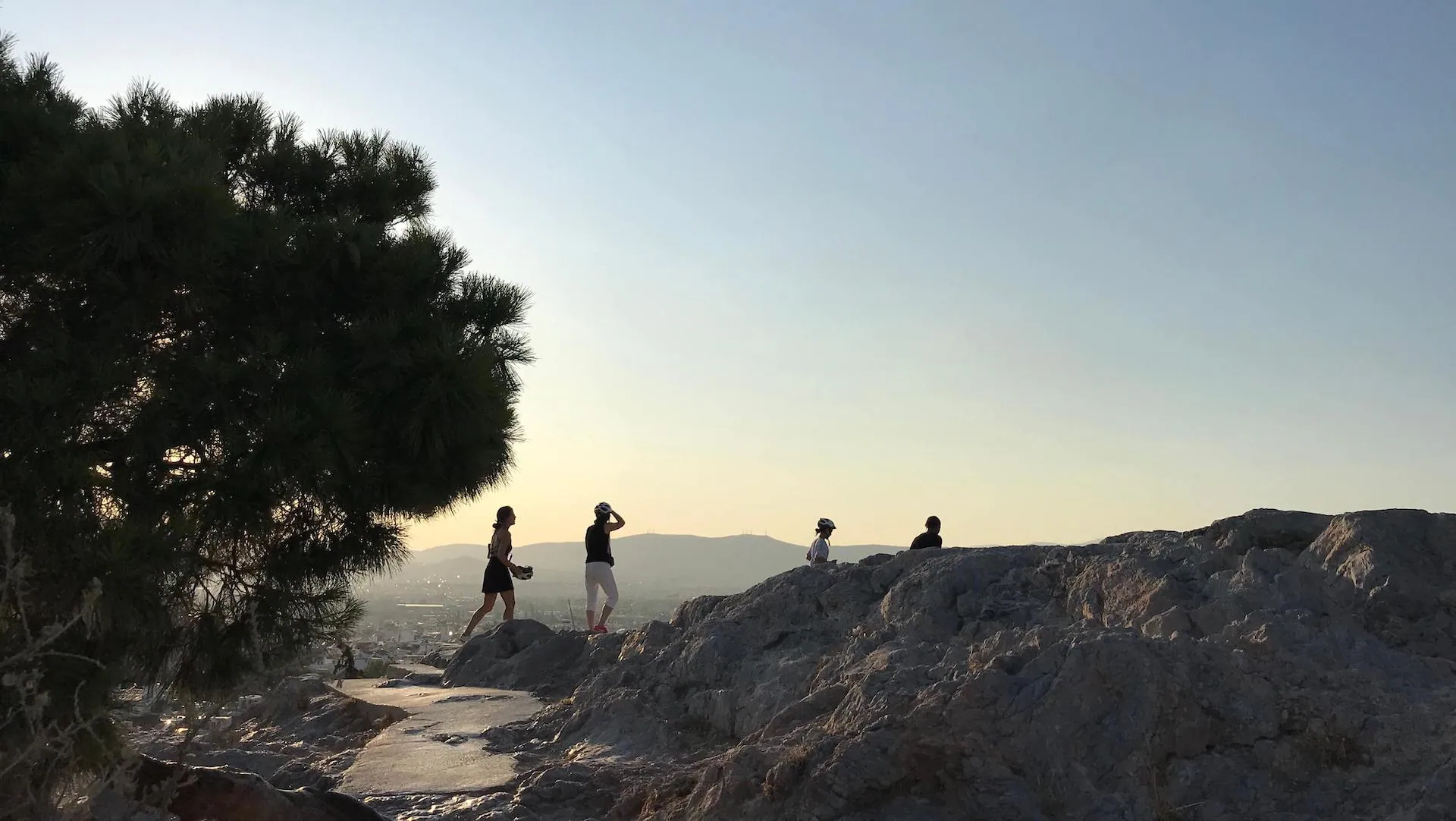
Meet Costas, Solebike Co-Founder

Thissio is one of those Athens neighbourhoods where everyday life and ancient history sit quietly side by side. From Acropolis views and old railway traces to neoclassical houses, cafés, open-air cinema and local stories, this guide shares why Thissio is best experienced slowly.
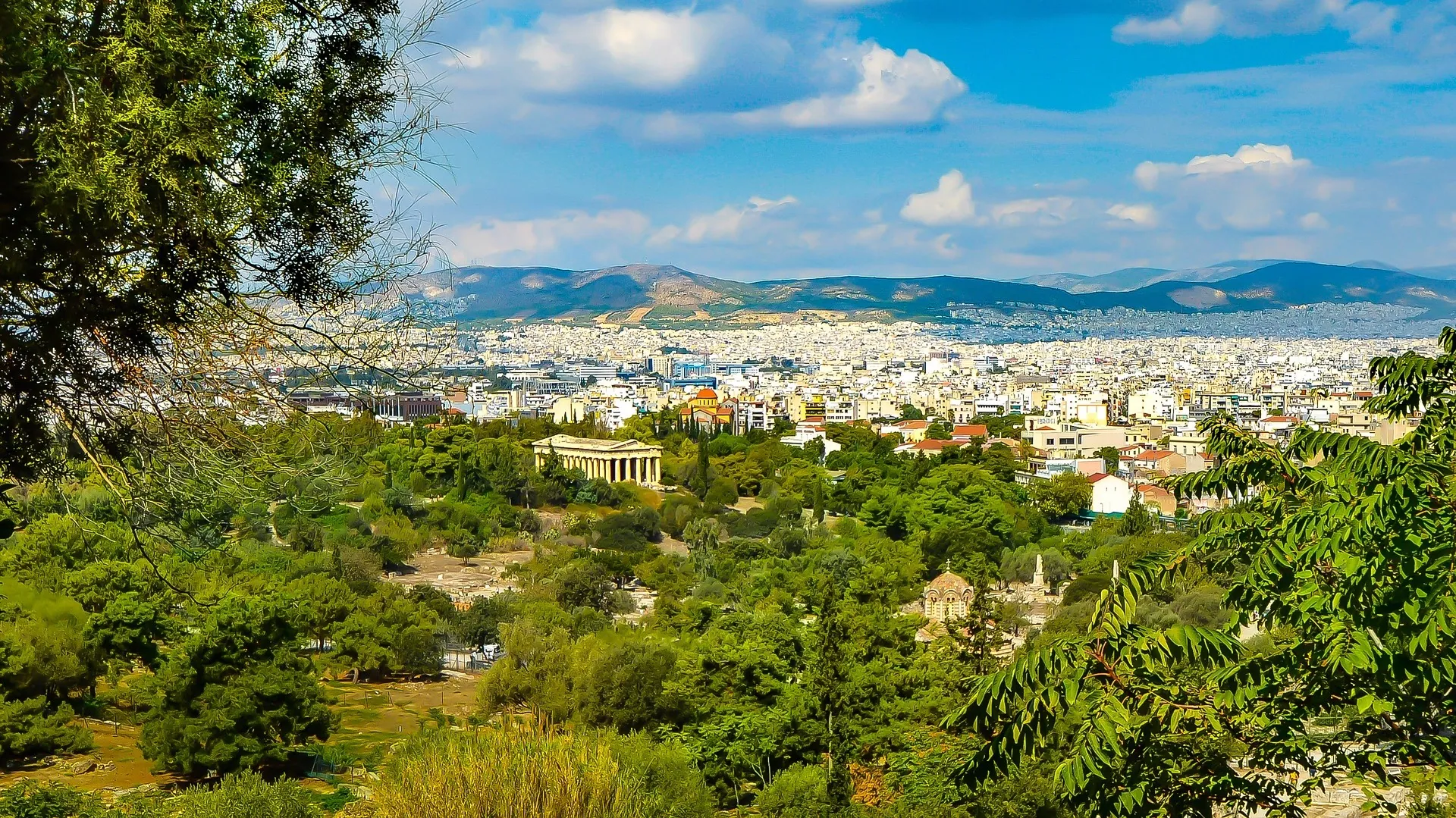
There is a particular pleasure in standing in one spot and feeling two different versions of Athens at the same time. Thissio gives you that feeling very naturally. It is one of those neighbourhoods I always enjoy pointing out to guests, because at first it may look like a pleasant place for a coffee or a walk — but if you slow down a little, it starts revealing much more.
On one side, Thissio leans into the ancient city. The Ancient Agora spreads out below, the Acropolis rises above the rooftops, and archaeological paths move quietly through olive trees, old stones and open views. On the other side, it belongs completely to modern Athens: cafés with chairs spilling onto the pavement, a train line still running its daily rhythm, an open-air cinema, and the kind of everyday local life that has nothing to do with monuments at all.
This is what I like most about Thissio. It does not choose between these two worlds. It simply holds both at the same time, without making a big statement about it.
The nearby Herakleidon Museum adds beautifully to that contrast: a modern cultural space on the city side of Thissio, yet one that keeps a thoughtful bridge open to antiquity. It fits the neighbourhood well, because Thissio is exactly that kind of place — modern enough to feel alive, old enough to remind you where you are.
Along Apostolou Pavlou Street, the pedestrian path that follows the edge of the Ancient Agora, you get one of the clearest feelings of what makes Thissio special.
To your right, ancient Athens: weathered marble, quiet paths, old walls, and that kind of stillness that makes you lower your voice without really deciding to. To your left, ordinary Athens continues with no drama — people having coffee, children passing by, street musicians, friends meeting, waiters moving between tables.
Look up from almost anywhere along this street and the Acropolis appears above the trees. Not staged for a photograph. Not hidden behind a ticket entrance. Just there, watching over the neighbourhood the way it has for a very long time.
I like this part of the ride because it reminds you that Athens is not a city where history sits separately from daily life. Here, the ancient and the modern are not arranged in different rooms. They live next to each other.
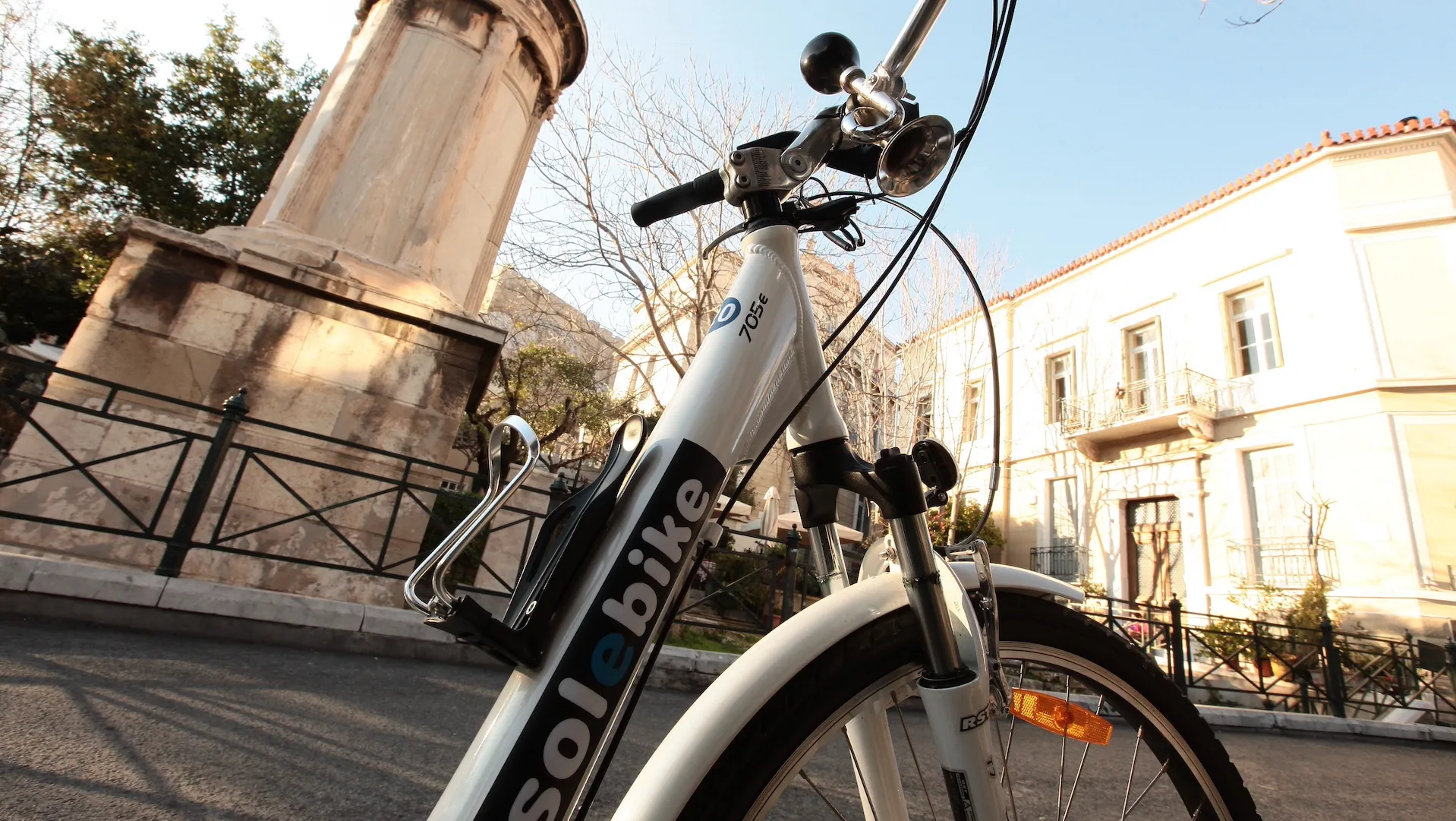
One more thing I enjoy in Thissio is its architecture. Between the cafés, pedestrian streets and archaeological views, you can still notice beautiful neoclassical houses and older buildings that tell another chapter of Athens — the city that started taking shape after it became the capital of modern Greece in the 19th century.
These buildings are not always grand in the way a monument is grand. Some are modest, some restored, some half-hidden behind trees, balconies or shopfronts. But they add a very distinctive character to the neighbourhood. They remind you that Athens is not made only of antiquity and today’s city life. There is also the Athens of the mid-19th century and early modern period: a city trying to define its new identity through streets, houses, façades, colours and proportions.
This is why going through Thissio can feel so rich. In a short distance, you may pass ancient remains, neoclassical homes, old railway traces, cafés, museums and modern urban life. The neighbourhood becomes a small lesson in Athens architecture — not as something you study from a book, but as something you notice while moving through the streets.

A Thissio ride past neoclassical architecture, showing the elegant residential side of historic Athens. Photo: Sofia Souflaki
Long before Thissio became a relaxed stop for coffee and Acropolis views, it was also a starting point of modern movement.
On 27 February 1869, the first steam-powered train of the Athens–Piraeus line departed from the historic station here, linking the capital with its port and changing the rhythm of the whole city.
It is an easy detail to miss today. You may stand near the station thinking only about where to get a drink or how to continue your walk. But this small station once marked a genuine shift — a moment when Athens began moving at a different, more modern pace.
There is another, quieter trace of that transport history if you look down rather than up.
Along Iraklidon Street, a stretch of old tram rails still lies embedded in the road — remnants of Tram Line 12, which once connected the heart of the city, all the way out to Thissio. This was not a scenic route created for visitors. It was a working route for working Athens. It linked the commercial centre with the western districts of the city and the factories along Pireos Street.
That is what makes the rails interesting to me. They are small, almost hidden, but they carry a different memory of Athens — not the official monumental memory, but the memory of people going to work, moving through the city, carrying goods, meeting the needs of everyday life.
Today, Iraklidon feels relaxed, with cafés, soft afternoons and people walking slowly. But those rails underfoot remind you that this calm little street once carried the movement of a much busier, more industrial Athens.
In 1862, Thissio became home to what is considered Athens’ first public garden, known affectionately as “Perivolaki tou Laou”, the little garden of the people.
I love this name because it says almost everything. This was not a royal garden or a polished civic monument. It was a small public space for ordinary Athenians, and it was used that way.
Locals celebrated Easter here, and at the southern edge of the square there was once a large cistern where neighbourhood children learned to swim. This is the kind of detail that changes the way you look at a place. Suddenly, the square is not only a stop on a walk. It becomes somewhere people actually lived, played, gathered and remembered.
The square also had a rougher, more practical side. Until the 19th century, every Monday, Thissio hosted a horse, mule and donkey market known as the horse bazaar.
Try picturing that next to today’s café tables: traders calling out, animals moving through the dust, Athenians gathering not for leisure, but for the practical needs of daily life. It is a completely different atmosphere from the Thissio we see now — and still, somehow, it belongs to the same place.
This is where Thissio connects outward into the wider fabric of old Athens: toward the Ancient Agora, Monastiraki, Plaka, Kerameikos and up toward Philopappou Hill. It is a neighbourhood that naturally invites you to continue.
You can do that on foot, slowly and beautifully. Or, if you want to connect more of these areas without losing the feeling of being inside the city, you can explore historic Athens by eBike and let a local guide help you link the neighbourhoods, views and stories together.
By evening, Thissio changes mood again.
Cinema Thission, open since 1938, keeps alive one of Athens’ most beautiful summer rituals: watching a film outdoors while the Acropolis glows quietly above the trees.
It is the kind of thing that almost sounds too charming until you actually sit there with a drink in hand, half watching the film and half looking at the view. And that is also very Athens. Sometimes the city does not ask you to choose between culture, leisure and history. It simply gives you all three in the same evening.
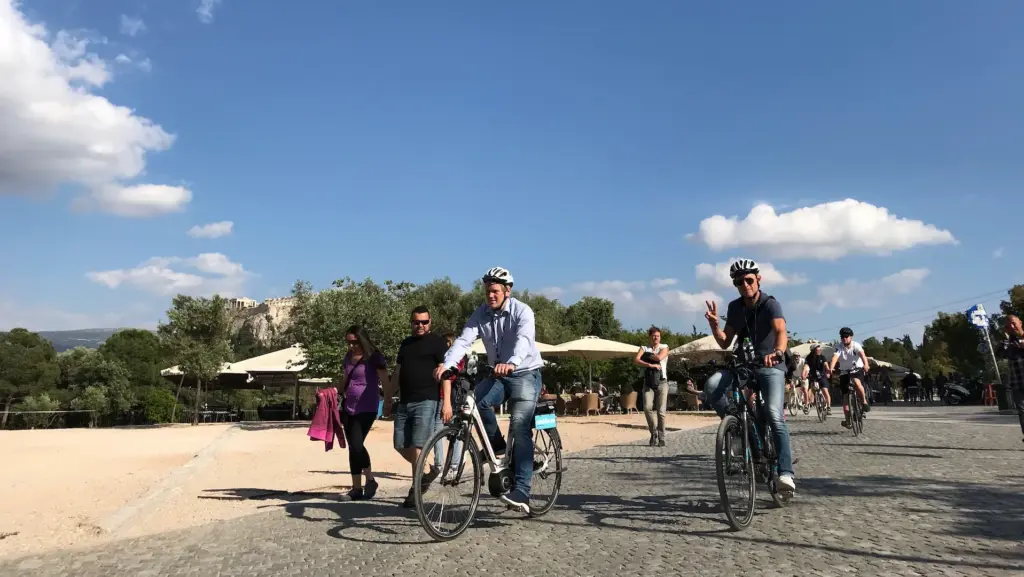
Thissio offers open paths, Acropolis views, and one of the most enjoyable bike routes in central Athens. Photo: Sofia Souflaki.
The best way to feel Thissio properly is slowly.
Cross Apostolou Pavlou Street without rushing. Let the Ancient Agora pull your attention one way and the cafés pull it another. Notice the old rails. Look at the Acropolis when it appears between the trees. Do not treat Thissio only as a passage between Psiri and the Acropolis area.
Late afternoon or early evening often suits it beautifully, when the light softens and the neighbourhood begins to feel less like a sightseeing route and more like a local meeting place. Thissio is also one of those places that feels especially beautiful in the morning, before the area gets busier. That is why it fits naturally into the rhythm of our 9.15 eBike Tour in Athens.
If you want to explore more neighbourhoods like this with a local guide, our Athens eBike tours are designed to connect the historic centre, viewpoints and everyday city life without rushing.
Not to rush through the city.
But to understand how the pieces fit together.
Thissio does not ask to be understood quickly. It is a neighbourhood best met the way you would meet an old friend with many stories — a little at a time, without checking your watch.
Local history note: Some of the details in this article are drawn from “Ιχνηλατώντας την πόλη με οδηγό την ιστορία και τη λογοτεχνία” by Θ. Γιοχάλας / Τ. Καφετζάκη, a favourite book of mine (unfortunately only in Greek) and a source that preserves small stories of old Athens — the kind of stories that rarely appear in standard travel guides.
https://maxmag.gr/agnosti-ellada/thisio-agnostes-ptyches-tis-istorikis-gitonias/
This series shares the Athens neighbourhoods we keep returning to — places where history, local life, architecture, views and everyday rhythm meet. These are not complete historical guides, but personal notes from the city we move through every day and love sharing with our guests.
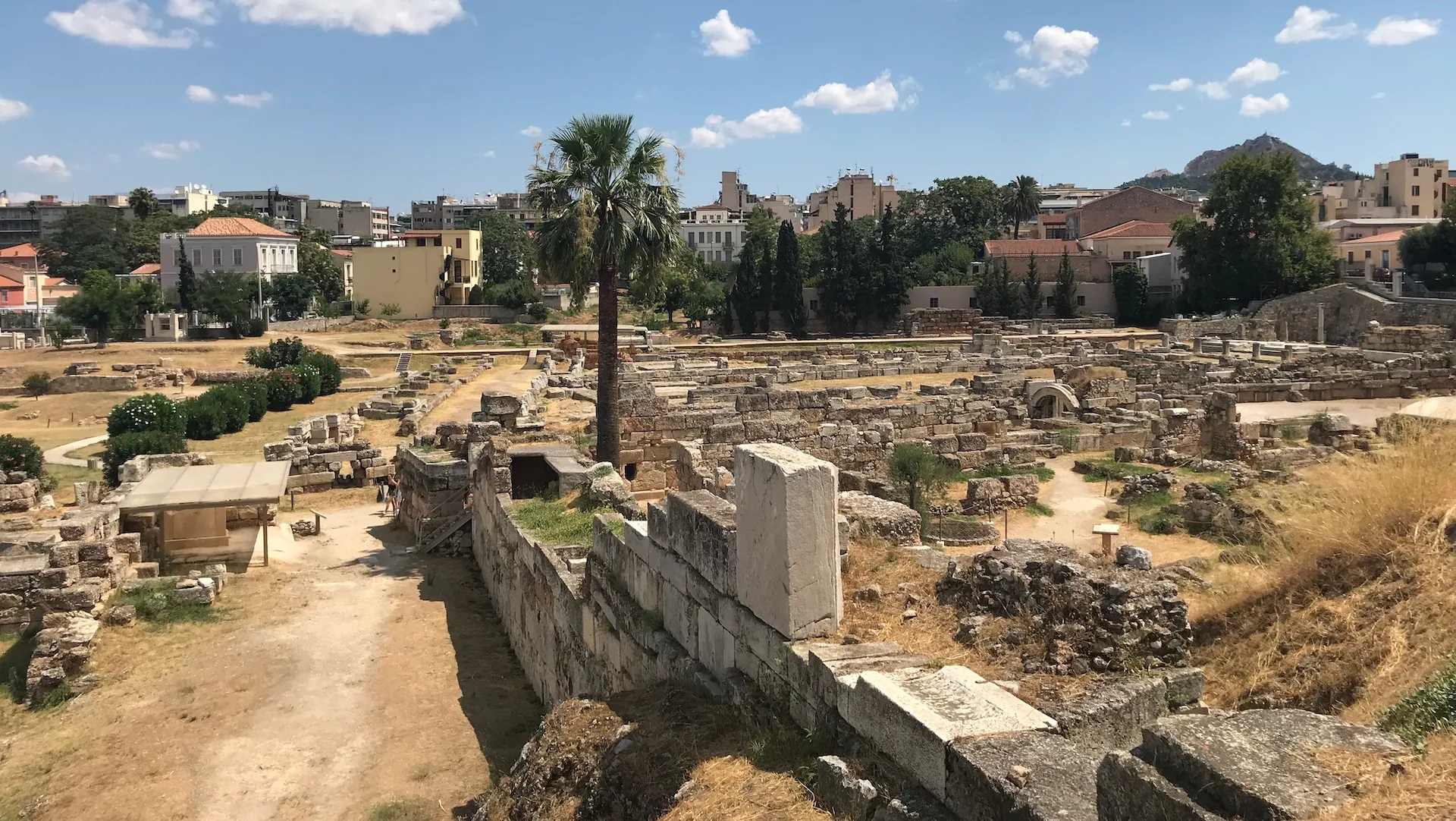
Kerameikos is often passed by on the way to Thissio, Monastiraki, or Gazi, but this quiet archaeological site reveals a deeply human side of Athens. Through clay, pottery, burial customs, ancient roads, the Eridanos River, and later city layers, Kerameikos helps us see Athens from the ground up.
Plaka is known as the pretty old neighbourhood below the Acropolis, but its smaller streets — Tripodon, Lisiou, Mnisikleous and Tholou — hold a deeper story of ancient theatre, lost nightlife and a city that never stopped reshaping itself.







A huge thank you for this philosophy-themed bike tour of Athens. It was an enriching and unique experience, following in the footsteps of Socrates, Plato, and Aristotle, blending history, reflection, and exploration of the city.